

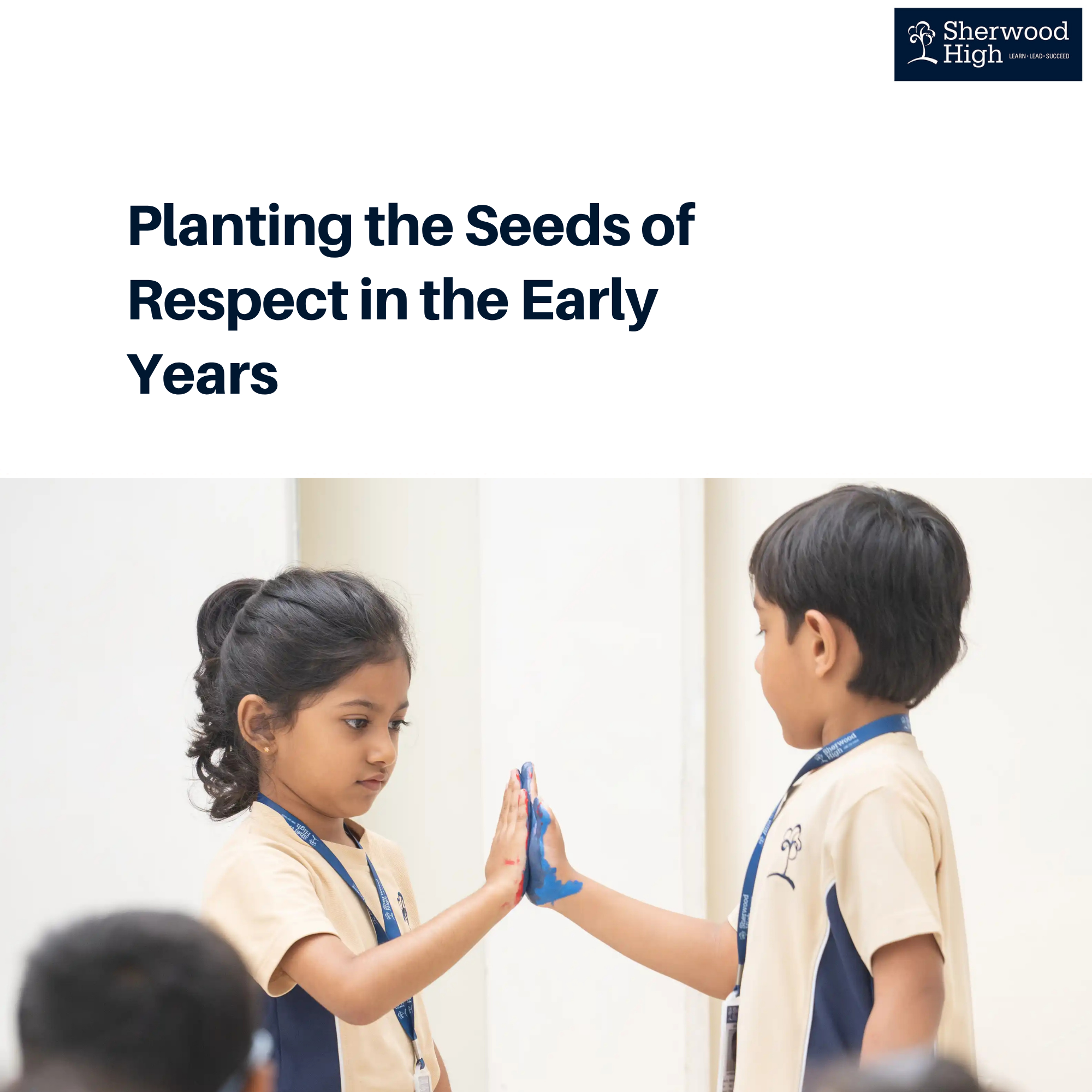
Planting the Seeds of Respect in the Early Years
In the early years of childhood, learning extends far beyond letters, numbers, and colours. These formative years are when children begin to understand how to interact with the world around them – how to share space, express emotions, and build relationships with others. Among the many values introduced during this stage of development, respect stands as one of the most important.
Respect in early childhood education is not simply about teaching children to say “please” and “thank you.” It is about helping them understand that every person, every idea, and even the environment around them deserves care and consideration. When children begin to practice respect in their everyday interactions, they start building the foundations of empathy, kindness, and responsible citizenship.
At Sherwood High, nurturing respect in the early years is an essential part of our approach to holistic learning. Through thoughtful guidance and meaningful classroom experiences, young learners gradually discover what it means to treat others with dignity and understanding.
Understanding Respect Through Everyday Experiences
For preschool children, values are best learned through daily experiences rather than abstract explanations. Young learners observe, imitate, and absorb behaviours from the adults and peers around them. A teacher’s tone of voice, the way classmates interact, and the atmosphere of the classroom all contribute to shaping a child’s understanding of respectful behaviour.
Simple classroom moments often become powerful lessons. Waiting patiently for a turn, listening while someone else is speaking, sharing materials during activities, or helping a friend who needs support – these experiences help children understand what respect looks like in action.
When children feel respected by adults, they also learn to extend the same courtesy to others. This mutual respect creates a safe and positive learning environment where children feel valued and confident to express themselves.
Building Empathy and Emotional Awareness
One of the most meaningful ways children learn respect is by developing empathy – the ability to understand and care about the feelings of others. In the early years, children are still learning to identify their own emotions, let alone those of others. Guided conversations, storytelling, and play-based learning provide opportunities for them to explore these feelings.
For example, when a child accidentally hurts a friend during play, teachers gently guide them to reflect on how the other person might feel. Through such moments, children begin to recognise that their actions affect others. Over time, this awareness encourages more thoughtful and compassionate behaviour.
Social-emotional learning in preschool classrooms plays a crucial role in developing these skills. Activities that involve cooperation, group play, and collaborative problem-solving allow children to practice patience, understanding, and kindness in a supportive setting.
Respecting Differences
Another important aspect of respect is learning to appreciate differences. Every child comes to school with unique experiences, backgrounds, and perspectives. Early childhood education offers a valuable opportunity to introduce children to the richness of diversity.
Through stories, cultural celebrations, and inclusive classroom discussions, children learn that differences in language, traditions, or abilities make communities stronger and more vibrant. They begin to understand that every individual deserves to be accepted and valued.
Teaching respect for diversity at an early age helps children grow into individuals who are open-minded, tolerant, and compassionate. It prepares them to live in a world where understanding and cooperation across cultures are increasingly important.
Respect for the Environment
Respect also extends beyond people to the environment around us. Young children are naturally curious about nature, and this curiosity can be gently guided into care and responsibility.
Simple habits such as tidying up after activities, caring for classroom plants, conserving materials, and learning about nature help children develop respect for their surroundings. These small actions nurture environmental awareness and teach children that their choices can positively impact the world around them.
By encouraging children to appreciate and protect their environment, schools help cultivate a sense of responsibility that will remain with them throughout their lives.
Learning Through Positive Role Models
Children learn values not only through instruction but through observation. Teachers and caregivers play a vital role in modelling respectful behaviour in everyday interactions.
Speaking kindly, listening attentively, acknowledging each child’s ideas, and resolving conflicts calmly demonstrate what respectful communication looks like. When children consistently observe such behaviour, they begin to mirror it in their own interactions.
Positive role modelling also reinforces the idea that respect is a two-way process. Just as children are expected to respect others, they also deserve to be treated with patience, fairness, and understanding.
A Foundation for Lifelong Character
The early years are often described as the foundation of lifelong learning. During this period, children begin forming habits, attitudes, and values that shape their character as they grow.
Teaching respect during early childhood development lays the groundwork for strong relationships, responsible behaviour, and positive social interactions. Children who understand respect are more likely to cooperate with others, communicate thoughtfully, and approach challenges with empathy.
At Sherwood High, we believe that character building in preschool is as important as academic readiness. By nurturing respect, kindness, and understanding, we help young learners grow not only as students but as compassionate individuals.
Growing Respectful Hearts
When children learn respect in the early years, they carry that value with them throughout their lives. It shapes how they treat friends, interact with teachers, engage with their communities, and contribute to society.
Respect begins with small actions – a kind word, a patient gesture, a willingness to listen. Yet these small actions gradually form the character of individuals who understand the importance of dignity, compassion, and responsibility.
In nurturing respect today, we are helping young learners build the foundations for a kinder and more thoughtful tomorrow.