

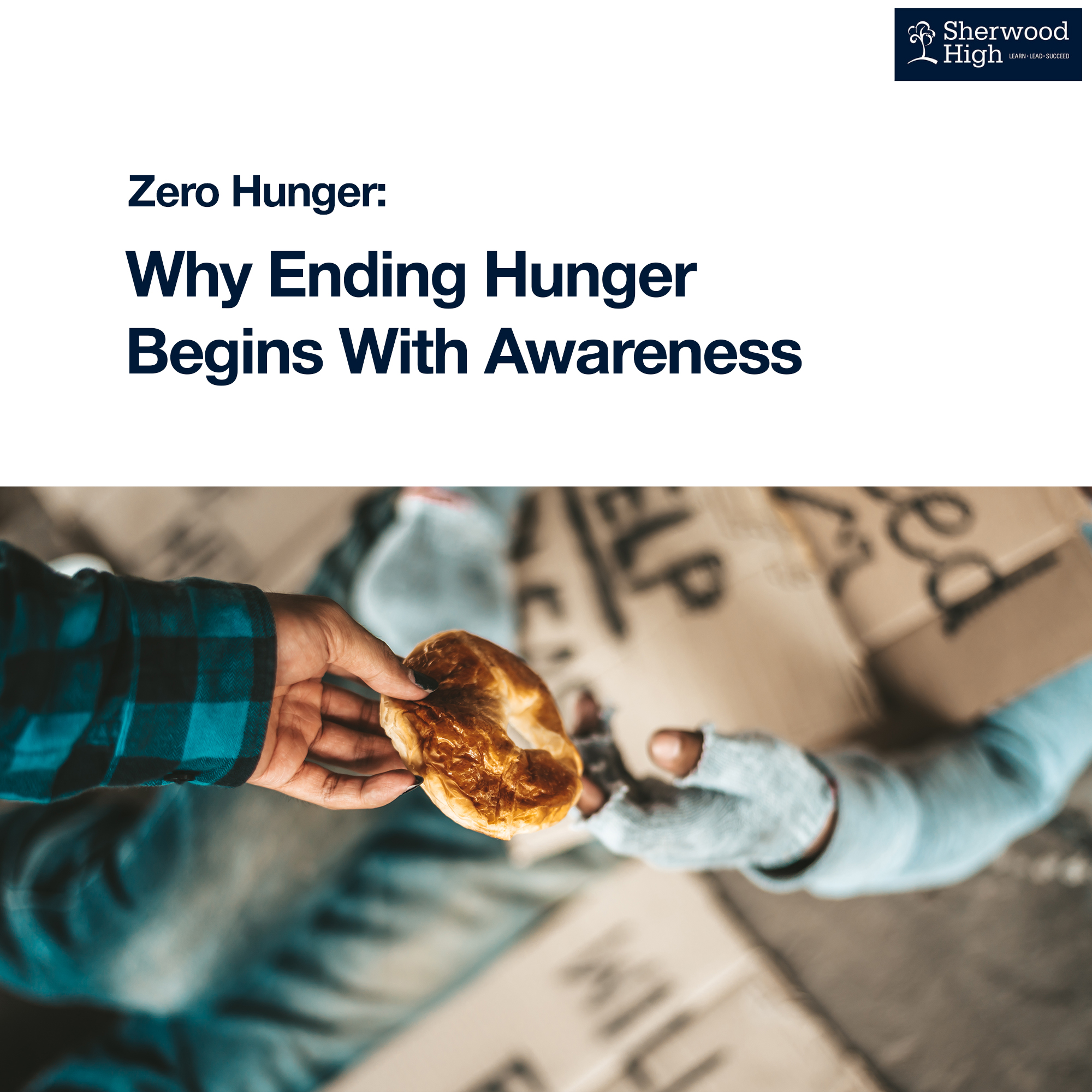
Zero Hunger: Why Ending Hunger Begins With Awareness
Food is one of our most basic needs. Yet, for millions of people around the world, access to sufficient and nutritious food cannot be taken for granted. This is the challenge addressed by Sustainable Development Goal 2: Zero Hunger.
SDG 2 calls for an end to hunger, improved nutrition, food security, and sustainable agriculture. But for students, understanding Zero Hunger should go beyond learning about a global goal. It is also an opportunity to understand the value of food, recognise inequality, and develop responsible everyday habits.
Understanding Hunger Beyond an Empty Plate
Hunger is not simply about missing a meal. A person may have access to food and still lack the nutrients necessary for healthy growth and development.
This is why Zero Hunger is closely connected to nutrition. Children, in particular, need access to a balanced diet to support their physical growth, learning, immunity, and overall wellbeing.
When students understand this connection, conversations about hunger become conversations about health, equality, sustainability, and human dignity.
Learning to Value Food
One of the simplest ways children can connect with SDG 2 is by understanding the journey behind the food on their plates.
Every grain of rice, fruit, vegetable, or loaf of bread represents a chain of effort—from farmers and agricultural workers to transportation, markets, kitchens, and finally our tables.
Understanding this journey encourages children to see food as something valuable rather than disposable.
Small habits can begin with taking only as much food as we need, finishing what we serve whenever possible, storing food responsibly, and finding creative ways to use leftovers.
Why Food Waste Matters
Food waste and hunger may seem like separate issues, but they are part of a much larger conversation about how resources are produced, distributed, and consumed.
Reducing food waste at home and at school teaches children something important: responsible consumption begins with individual choices.
A lunchbox returned empty rather than filled with discarded food may seem like a small achievement, but the mindset behind it can last a lifetime.
From Awareness to Empathy
Education can help children understand that not everyone experiences food in the same way.
Age-appropriate discussions about hunger can encourage gratitude without guilt and empathy without pity. Students can explore community initiatives, food-sharing programmes, sustainable agriculture, kitchen gardens, and responsible consumption.
The objective is not simply to tell children that hunger exists. It is to help them recognise that thoughtful action can contribute to change.
Growing Responsible Global Citizens
The Sustainable Development Goals remind us that solving global challenges requires collective responsibility.
At Sherwood High, conversations around sustainability encourage students to connect what they learn with the world they inhabit. SDG 2 provides an opportunity to explore science, health, agriculture, economics, environmental responsibility, and social awareness through one interconnected issue.
Because achieving Zero Hunger is not only about providing food.
It is about building a world where everyone has the opportunity to grow, learn, and thrive.