

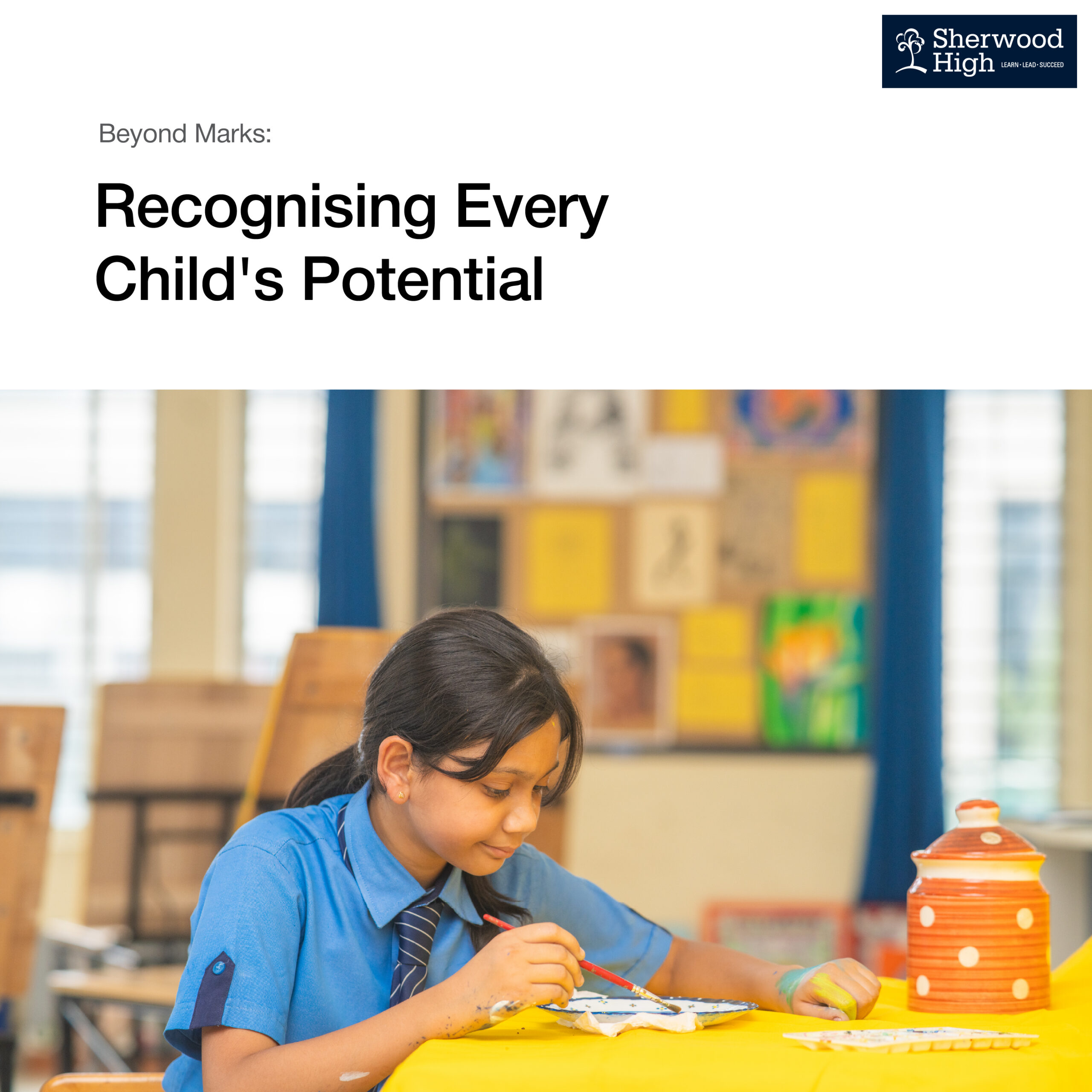
Beyond Marks: Recognizing Every Child’s Potential
Every Child Has a Strength Worth Celebrating
A child who solves a difficult maths problem deserves appreciation. So does the child who helps a classmate understand it. One may shine in academics, another may discover a passion for music, while someone else may show remarkable creativity, leadership or kindness. Every child has something valuable to offer, even if it cannot always be measured through marks.
Academic achievement is an important part of education. It reflects learning, discipline and understanding. But a child’s abilities extend far beyond examination results. Their curiosity, interests, emotional intelligence and willingness to try new things are equally meaningful parts of their development.
1. Learning Goes Beyond the Classroom
Some of the most meaningful lessons happen outside textbooks and examinations.
A student participating in a debate learns to express ideas confidently. A child performing on stage discovers the courage to face an audience. A young athlete learns teamwork, discipline and perseverance through practice and competition.
These experiences develop important life skills that complement academic learning. When children participate in sports, performing arts, creative activities and collaborative projects, they discover abilities they may not have recognised before. Education becomes more meaningful when children have opportunities to explore what they enjoy and discover what they can achieve.
2. Every Child Learns and Grows Differently
No two children have exactly the same interests, abilities or pace of development.
Some children are naturally expressive, while others prefer observing, reflecting and understanding before sharing their thoughts. Some enjoy solving logical problems, while others feel most confident through art, storytelling or hands-on activities. These differences are not limitations. They are part of what makes every learner unique.
Recognising individual strengths helps children develop a positive relationship with learning. Instead of measuring their progress only against others, they begin to appreciate their own improvement. Parents and educators play an important role in encouraging children to explore different interests, ask questions and develop confidence in their abilities.
3. Confidence Grows Through Encouragement
A simple word of encouragement can influence how a child approaches a challenge.
When children are appreciated for their effort, curiosity and improvement, they begin to understand that success is not limited to getting everything right the first time. A student who struggles with a subject but continues practising demonstrates determination. A child who volunteers to participate in an unfamiliar activity shows courage. Someone who learns from a mistake develops resilience. These achievements deserve recognition.
Encouraging children to focus on progress rather than perfection helps them become more willing to take on challenges and learn from new experiences. Over time, this approach can build confidence, independence and a stronger sense of self-belief.
4. Celebrating Talents Beyond Academics
A well-rounded education creates opportunities for children to discover interests beyond conventional academic subjects.
Sports encourage teamwork, persistence and discipline. Music and performing arts nurture expression and creativity. Literary activities strengthen communication and imagination. Community initiatives develop empathy, responsibility and an understanding of others. Equally important are the everyday qualities children demonstrate. The student who welcomes a new classmate, the one who patiently helps a friend, or the child who takes responsibility during a group activity is showing strengths that matter beyond school.
Not every achievement comes with a medal, certificate or score. Some are reflected in the person a child is becoming.
Recognizing these moments helps children understand that their contributions matter.
5. Helping Children Discover Their Potential
Children benefit from an environment where they feel comfortable exploring their interests without the pressure of being exceptional at everything.
Parents and educators can support this journey by listening to children’s ideas, encouraging participation in different activities and recognising small improvements.
Rather than asking only, “How many marks did you score?”, we can also ask:
- What was something interesting you learned today?
- What did you enjoy doing the most?
- Did you try something new?
- What challenge did you overcome?
- What are you proud of accomplishing?
These conversations help children reflect on their experiences and understand that learning involves much more than examination performance. When children feel valued for their individual strengths, they are more likely to approach opportunities with curiosity and confidence.
6. Preparing Children for More Than Examinations
Academic knowledge creates a strong foundation, but navigating life also requires adaptability, communication, collaboration, creativity and emotional awareness. Children develop these qualities through everyday experiences, from working on group projects and participating in competitions to resolving disagreements and taking responsibility.
A balanced approach to education recognises the importance of academic achievement while also creating space for personal development.
Every Child’s Journey Deserves Recognition
Marks can tell us how a child performed in an examination. They cannot tell us everything about that child’s imagination, determination, compassion or potential. A child’s journey is shaped by countless moments of learning, discovery and growth. Each new skill, thoughtful action and brave attempt contributes to the person they are becoming.
As parents and educators, our responsibility is to recognise these moments, nurture individual strengths and encourage children to believe in their abilities.
Because every child has potential worth recognising, and every achievement deserves a chance to be celebrated.