

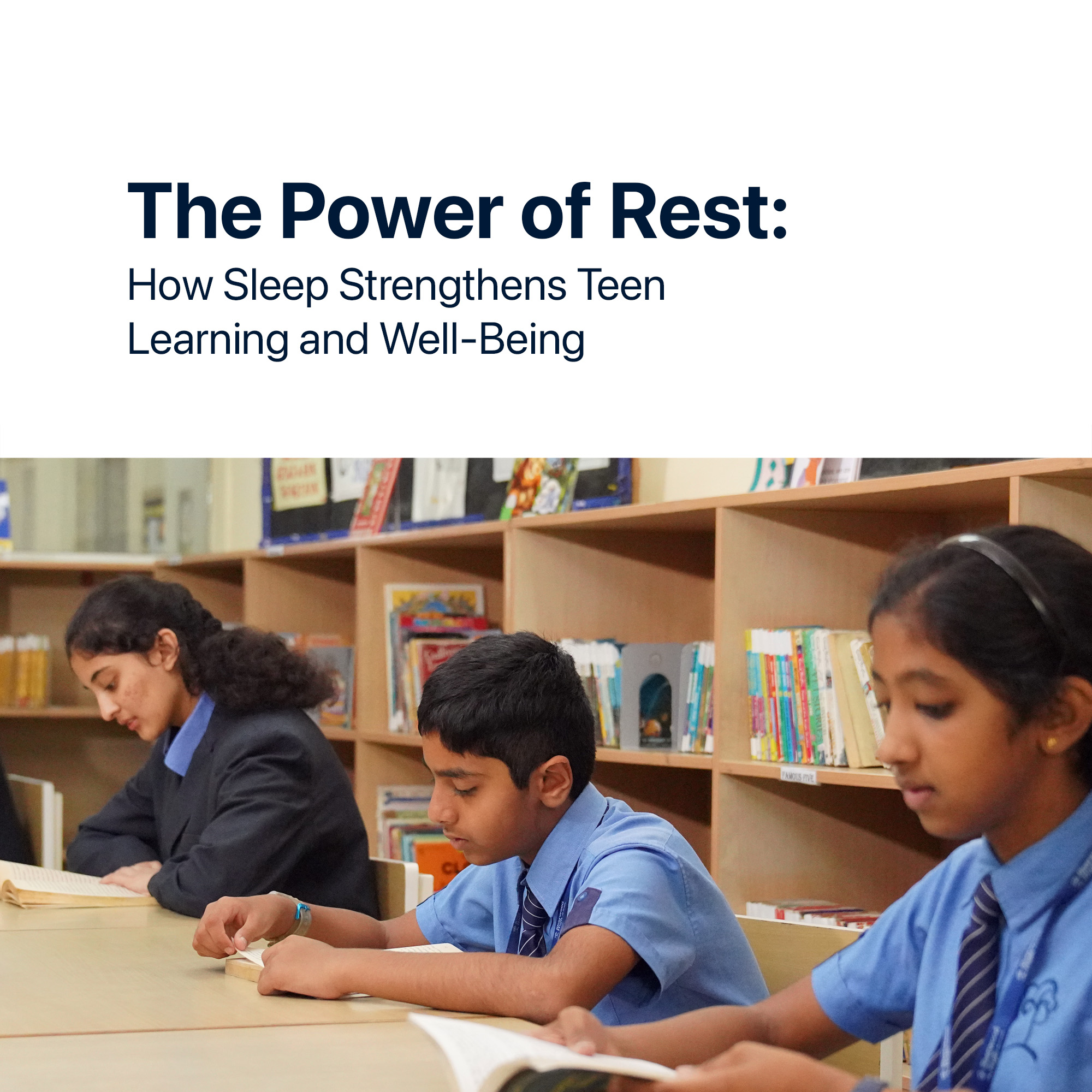
The Power of Rest: How Sleep Strengthens Teen Learning and Well-Being
At Sherwood High, we recognise that a teenager’s life today is more demanding than ever before. Academic pressure, social expectations, co-curricular commitments, and the constant pull of digital media often leave students feeling overwhelmed and exhausted. Many teenagers often find themselves feeling persistently tired. While this fatigue is sometimes attributed to medical issues, in most cases the explanation is simple: teenagers are not getting the amount of sleep their developing brains truly need.
Sleep is not a luxury for adolescents – it is a critical necessity. During the teenage years, the brain undergoes rapid physical, cognitive, and emotional development. This period of growth requires more rest than childhood or adulthood. Scientific research consistently shows that teenagers need about 9 – 10 hours of uninterrupted sleep each night to function at their best. Yet many students sleep far less, often averaging between six and seven hours, which has a profound impact on how they learn, behave, and feel.
Sleep is the time when the brain repairs itself, consolidates memories, and strengthens neural pathways. Everything a student learns during the day – equations, historical facts, grammar rules, lab concepts – is processed and organised during sleep. Without adequate rest, the brain struggles to retain information and think clearly. Concentration drops, reaction time slows, and motivation weakens. This is why students who habitually sleep too little often find themselves rereading the same sentence, losing focus in class, or feeling mentally drained even before the day begins.
A major study conducted in Delhi found clear and measurable links between sleep and academic performance among adolescents. Students who slept longer and reported better sleep quality had higher GPAs, stronger memory, and better emotional stability. Sleep duration and sleep quality emerged as significant predictors of academic achievement, showing that well-rested students are more likely to stay attentive, participate confidently, and grasp new concepts quickly. Moreover, poor sleep was closely tied to increased anxiety and depressive symptoms, reminding us that sleep is not just about academics – it is central to a student’s overall well-being.
Teenagers need more sleep because their brains are working intensely. Hormonal changes shift their internal clocks, making it harder for them to fall asleep early and even harder to wake up fully alert for early morning classes. Add homework, exams, sports, part-time responsibilities, and the influence of screens – and the result is a generation of students fighting daily battles with exhaustion. Screens, in particular, stimulate the brain and suppress melatonin, the hormone that helps us sleep. Late-night scrolling, studying on devices, or gaming often delays bedtime further, making it even more difficult for adolescents to get restorative rest.
However, the problem is not only biological – it is social. Teenagers today feel pressure to excel academically, stay connected socially, stay active in co-curriculars, and maintain constant online presence. Many also crave late-night privacy, using quiet hours to relax after a long day. These habits, though understandable, often come at the cost of sleep. When we look at the responsibilities placed on teenagers, it becomes clear why they struggle to get the recommended amount of rest.
Yet even though sleep may seem simple, insufficient sleep has powerful consequences. Fatigue affects attention, memory, problem-solving ability, and creativity – all of which are essential for academic success. A tired brain moves slower, making learning feel harder and more frustrating. Lack of sleep can also impair emotional regulation, making teenagers more irritable, anxious, or withdrawn.
At Sherwood High, we believe it is important to understand these challenges with empathy. Teenagers are navigating complex developmental changes while balancing responsibilities and expectations. When we support their need for healthy sleep, we are supporting their learning, their health, and their emotional resilience. Encouraging better sleep habits is not about imposing restrictions – it is about helping students thrive.
Good sleep strengthens memory, boosts cognitive speed, improves concentration, and enhances motivation. A well-rested student walks into school ready to learn, respond thoughtfully, and perform confidently. We frequently observe that when students begin sleeping better, their academic performance improves, their mood stabilises, and their enthusiasm increases. They participate more eagerly, complete tasks with clarity, and show greater confidence in their abilities.
Supporting healthy sleep also means creating environments where teenagers feel understood. By acknowledging their pressures, helping them manage schedules, guiding them towards balanced routines, and emphasising the importance of rest, we help them develop lifelong habits that contribute to long-term success. Encouraging screen-free evenings, structured study time, and moments of calm can make a significant difference in their quality of rest.
Ultimately, sleep is not separate from learning – it is an essential part of it. Rested minds are capable minds. When teenagers receive the sleep they need, their academic potential rises noticeably, their emotional well-being strengthens, and their outlook becomes more positive and hopeful. Sleep is a simple yet powerful tool that can transform how a student thinks, learns, and experiences school.
At Sherwood High, we are committed to nurturing students holistically. Supporting healthy sleep habits is part of our promise to guide adolescents not only towards academic excellence but also towards balanced, joyful, and fulfilling lives. When we help teenagers rest well, we help them rise higher – ready to learn, ready to engage, and ready to thrive.