

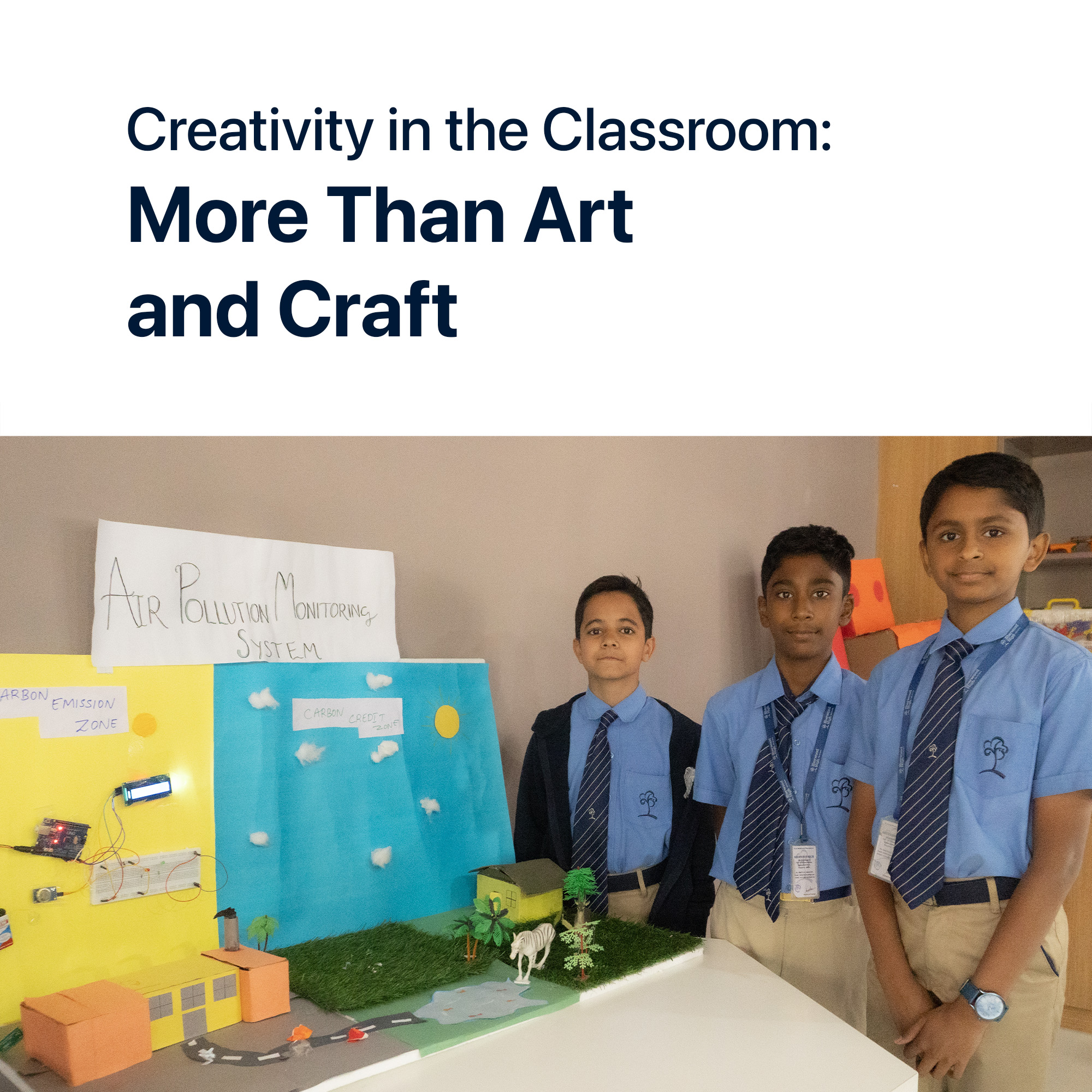
Creativity in the Classroom: More Than Art and Craft
“Creativity is seeing what others see and thinking what no one else ever thought.” – Albert Einstein
When we hear the word creativity in a classroom, most of us immediately think of art projects, colouring sheets, or craft activities. While these certainly have their place, creativity in education goes far beyond paper, scissors, and paint. True creativity is not confined to how something looks, but lives in how students think, question, and interpret the world around them.
At Sherwood High, we believe that some of the most powerful creative moments are quiet, thoughtful, and deeply meaningful. Creativity reveals itself when a student pauses mid-discussion and asks, “Why did this happen?” or “If everyone follows rules, why do we still need governments?” These questions may not always have simple answers, but they signal something far more important: students are actively thinking.
Such moments show that learners are not merely absorbing information; they are analysing ideas, making connections, and forming independent perspectives. This is where real learning begins – when curiosity becomes the driving force and classrooms transform into spaces of inquiry rather than instruction alone.
A lively classroom debate is another space where creativity thrives. Whether it is a Pick a Side discussion on Electronic Voting Machines (EVMs) or a thoughtful conversation around contemporary social and political issues, students learn to articulate opinions, support arguments with reasoning, and respect differing viewpoints. In these exchanges, creativity lies not in delivering the “right” answer, but in learning how to listen, respond, and reason with clarity and confidence.
These discussions also teach students that disagreement does not mean disrespect. Instead, it becomes an opportunity to broaden understanding. As students engage with diverse perspectives, they develop empathy, adaptability, and the ability to think beyond their own assumptions – skills that are essential in a rapidly changing world.
At Sherwood High, learning across subjects is designed to encourage this depth of engagement. In science classrooms, creativity emerges through observation, inquiry, and experimentation. In the STEAM lab, interdisciplinary integration allows curious minds to ask questions, find solutions, and create with purpose. Students shift from being passive users of information to active creators of knowledge, understanding how science, technology, engineering, art, and mathematics intersect in the real world.
Civics comes alive when students experience democracy rather than simply read about it. Mock parliaments, debates on current affairs, and activities where students design rules for an imaginary society help them understand governance, responsibility, and civic participation in tangible ways. These experiences make abstract concepts accessible and relevant, reinforcing the idea that civics is not just a subject, but a lived reality.
Through such creative learning experiences, students develop confidence, communication skills, and an appreciation for diverse opinions – qualities that extend far beyond the classroom. They learn to present ideas clearly, defend viewpoints respectfully, and collaborate meaningfully with peers.
One of the most rewarding outcomes of creative learning is the confidence it builds. Students who may remain quiet during traditional lessons often find their voice during group discussions, debates, or role-based activities. When learning is not limited to writing answers on paper, every child has an opportunity to shine.
Language, in these moments, becomes more than comprehension or grammar. It becomes a tool for expression, connection, and inclusion. Creative classrooms create spaces where every student feels heard, valued, and encouraged to participate, fostering a sense of belonging that is crucial for academic and emotional growth.
At Sherwood High, we believe education should inspire curiosity and joy. Our classrooms encourage questioning, collaboration, and meaningful conversations – whether it is analysing a political cartoon, linking historical events to present-day realities, interpreting data in mathematics, or exploring scientific phenomena through real-world applications.
These experiences help students see learning as dynamic, relevant, and deeply connected to the world around them. They begin to understand that knowledge is not static, but evolving – and that they, too, have a role to play in shaping ideas and conversations.
In an age dominated by screens, fast information, and exam pressure, creativity restores the human element of learning. It reminds students that history is shaped by people like them, that civics influences their everyday lives as citizens, and that language builds bridges between individuals and ideas. Science and mathematics, too, move beyond formulas, helping students understand their environment and the world they inhabit.
Creativity in the classroom is not just about making things – it is about making connections. When students begin to connect learning to life, education transcends textbooks and examinations, leaving a lasting impact long after the lesson ends.
True creativity in education is not about adding more activities. It is about nurturing curiosity, encouraging meaningful inquiry, and helping students find their voice. And when students learn to think deeply, question thoughtfully, and express themselves confidently, education becomes not just preparation for the future – but a powerful experience in the present.