

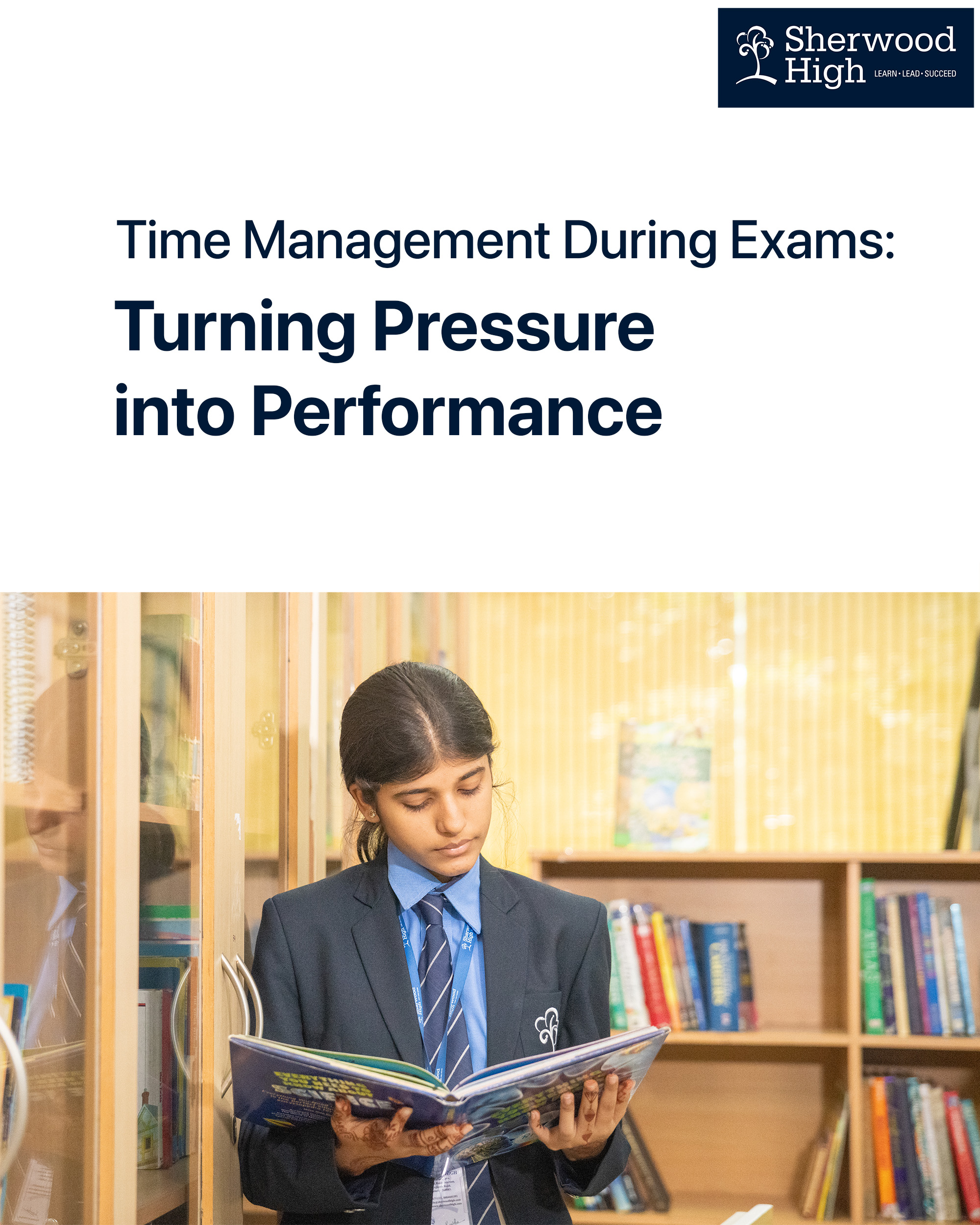
Time Management During Exams: Turning Pressure into Performance
Exams often bring pressure, anxiety, and that familiar feeling that time is slipping away too quickly. Yet, when we look closely, students who manage exam season effectively are not always the most naturally gifted – they are the most organised.
Effective time management during exams does more than help students finish portions. It reduces stress, sharpens concentration, and allows preparation to translate into performance.
As Benjamin Franklin wisely said, “You may delay, but time will not.”
The key is not to fear time, but to work with it.
Preparing Before the Exams Arrive
Time management does not begin the night before an exam. It begins much earlier – often months in advance – with mindset and planning.
One of the simplest yet most powerful habits is keeping track of tentative exam dates and becoming mentally comfortable with them well before they arrive. When students acknowledge exams early instead of avoiding the thought of them, the pressure reduces significantly. Familiarity replaces fear.
Spacing out studies across the academic year is another powerful buffer against stress. Cramming in the final days may feel productive, but it often increases anxiety and weakens retention. Consistent, spaced revision allows information to settle deeply and naturally.
Equally important is understanding that productivity does not mean constant studying. Short, meaningful breaks strengthen focus. Engaging in activities students enjoy – whether it is music, art, sport, or simply stepping outdoors – restores energy and reinforces the will to return to studies with clarity.
Physical wellbeing plays a crucial role in mental performance. Brisk walking, light jogging, stretching, yoga, or pranayama can significantly reduce stress levels and improve concentration. Even a short session of physical activity increases oxygen flow to the brain, enhancing comprehension and recall.
Sleep, too, must be handled wisely. While minor adjustments in sleep hours may happen during exam preparation, drastic reduction in sleep can harm memory and focus. A well-rested mind absorbs and retains information far more effectively than an exhausted one.
Nutrition also supports performance. Timely meals, balanced portions, and avoiding excessive junk food keep energy levels stable. Including milk, fruits, or fresh juices can provide sustained nourishment during intensive study periods.
And perhaps most importantly, students should remember that they do not have to manage stress alone. Talking to a trusted adult or writing in a journal can help release anxiety before it builds into panic. Emotional clarity strengthens academic clarity.
Avoiding distractions is another non-negotiable habit. Keeping the phone away while studying and focusing on one subject at a time significantly improves efficiency. Multitasking often creates the illusion of productivity, while focused work creates real progress.
On the Day of the Exam
The day of the exam should feel structured, not frantic.
Staying awake the entire previous night rarely helps. Sufficient sleep ensures alertness and calmness. Preparing essentials in advance – pens, ID card, stationery – and keeping them ready in a pouch avoids unnecessary last-minute stress.
Reaching the exam venue well in advance sets a positive tone. The journey to the exam hall is not the time for intense reading. Instead, students can enjoy the fresh air, observe their surroundings, and allow their mind to settle.
Once at the exam centre, a brief review of key concepts or a quick glance at a mind map is helpful. Detailed last-minute studying, however, can overwhelm the brain and increase anxiety.
It is also wise to avoid engaging in speculative discussions with peers. A casual comment about an “important question” or an unfamiliar topic can trigger unnecessary panic. Protecting one’s mental calm is as important as protecting one’s preparation.
When the question paper is received, students should read it carefully – slowly, and if necessary, more than once. A clear time schedule based on marks should be mentally mapped before writing begins. Attempting easier questions first builds confidence and momentum.
Throughout the exam, time awareness is crucial. Keeping aside five to ten minutes before the final bell for revision can make a significant difference. Those final minutes often reveal small omissions or errors that can easily be corrected.
After the exam ends, it is best not to discuss answers extensively – especially when other exams remain. Post-exam analysis can create unnecessary worry. Instead, students should take a short break, refresh themselves, and gradually shift focus to the next subject.
Time Management Inside the Exam Hall
Inside the exam hall, clarity is power.
- Read the question paper carefully.
- Attempt easy questions first.
- Allocate time according to marks.
- Keep 5-10 minutes for revision.
These simple principles ensure that no section is rushed and no marks are lost due to poor pacing.
As the saying goes, “Don’t watch the clock; do what it does – keep going.”
Consistency and calm progress matter more than speed alone.
Turning Anxiety into Achievement
Time management during exams is not about rigid control. It is about thoughtful planning, steady habits, and emotional balance.
When students space their studies, care for their physical health, avoid distractions, and approach exam day with structure, anxiety gradually transforms into confidence. Organisation replaces overwhelm. Preparation replaces panic.
Exams are not merely tests of knowledge – they are tests of composure, discipline, and time awareness.
With the right habits in place, students do not just survive exam season – they navigate it with strength.