

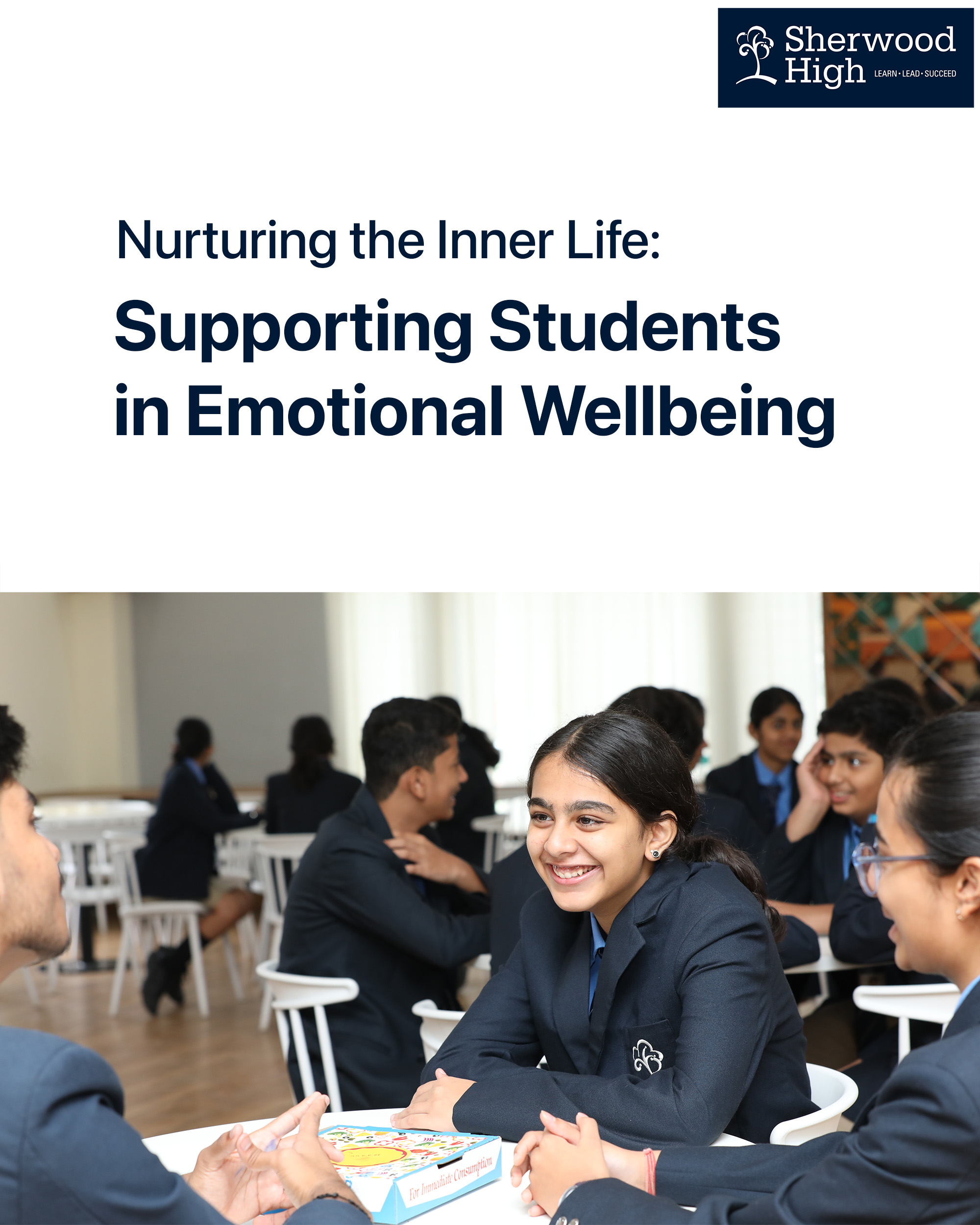
Nurturing the Inner Life: Supporting Students in Emotional Wellbeing
A child’s education is shaped not only by what they learn, but also by how they feel while learning. Emotions quietly influence attention, memory, motivation, relationships, and self-belief. When students feel safe, valued, and understood, their minds open to curiosity and growth. When they feel overwhelmed, unseen, or disconnected, learning becomes heavier and more difficult. Recognising this delicate balance is essential, which is why supporting student emotional wellbeing must remain at the heart of meaningful education.
At Sherwood High, we view emotional wellbeing as a foundational pillar of holistic education. It is not separate from academics, discipline, or achievement – it is deeply woven into all of them. Helping students understand their inner world, express their feelings in healthy ways, and develop resilience equips them with lifelong tools that extend far beyond the classroom.
From an early age, children begin forming beliefs about themselves. They quietly ask questions such as: Am I capable? Do I matter? Is it safe to be myself? The answers they receive- through interactions with teachers, peers, and the school environment- gradually shape their self-esteem and emotional security. When students are met with patience, encouragement, and respect, they begin to develop a stable sense of self-worth. They learn that mistakes are part of learning, not a reflection of their value. This understanding builds resilience in students and the courage to try again.
Emotional wellbeing also involves helping students recognise and manage their feelings. Childhood and adolescence are periods of rapid emotional change and child development. Students experience excitement, anxiety, disappointment, joy, frustration, and uncertainty- often all within the same day. Schools play a vital role in guiding children through these experiences. By offering consistent support and teaching simple strategies such as naming emotions, pausing before reacting, and seeking help when needed, students gradually develop emotional regulation. These skills strengthen emotional intelligence and enable children to navigate challenges with greater calm and clarity.
A nurturing school environment encourages students to speak openly about what they are experiencing. When children know they will be listened to without judgement, they are more likely to share concerns and ask for support. This sense of psychological safety is a cornerstone of positive mental health in schools. At Sherwood High, we strive to create spaces where students feel comfortable expressing themselves- whether through conversation, creative expression, reflective activities, or one-on-one interactions with teachers and counsellors.
Positive relationships are central to emotional wellbeing. The bonds students form with teachers often become some of the most meaningful connections in their lives. A teacher who notices a child’s effort, acknowledges their feelings, or simply checks in with a kind word can leave a lasting impression. These everyday moments of care communicate an important message: You are seen. You are important. You are not alone. Over time, such experiences shape how students view themselves and others.
Peer relationships also play a powerful role in shaping emotional health. Schools provide a unique setting where children learn how to cooperate, resolve conflicts, show empathy, and build friendships. Through group activities, collaborative learning, sports, and co-curricular programmes, students practice essential social skills. These experiences form the foundation of social-emotional learning (SEL) and support emotional maturity.
Teaching students to invest in themselves emotionally means helping them understand that caring for their mental health is not a weakness, but a strength. Just as children are taught to brush their teeth or eat nutritious food, they must also learn habits that support their inner wellbeing. Adequate sleep, regular physical activity, balanced nutrition, creative outlets, and moments of rest all contribute to emotional balance. When students understand the connection between their daily choices and how they feel, they become more empowered to take care of themselves.
Self-awareness is another essential aspect of emotional wellbeing. When students are encouraged to reflect on their thoughts, strengths, interests, and challenges, they gain a deeper understanding of who they are. This awareness supports better decision-making and helps students set realistic goals. It also reduces the tendency to compare themselves harshly with others, as they begin to appreciate their own unique journey.
Resilience grows when children are supported through difficulty rather than shielded from it entirely. Experiencing setbacks- such as a poor test result, a disagreement with a friend, or a missed opportunity- can feel overwhelming. However, with guidance and reassurance, these moments become powerful learning experiences. Students discover that disappointment does not define them, and that they possess the capacity to recover and move forward.
Emotional wellbeing is closely linked to academic success. Students who feel emotionally supported are better able to concentrate, participate, and persevere. They are more willing to ask questions, take intellectual risks, and engage deeply with learning. A calm and positive emotional state allows the brain to process information more effectively, strengthening memory and understanding.
At Sherwood High, we believe education should nurture the whole child- mind, body, and heart. Our approach to emotional wellbeing is woven into everyday interactions, classroom practices, and school programmes. We aim to equip students with not only academic knowledge, but also the emotional skills and inner strength needed to navigate life with confidence and compassion.
Supporting a child’s inner life is an investment in their future. When students grow up with emotional awareness, self-respect, and healthy coping skills, they are better prepared to face the complexities of adulthood. They become individuals who can build meaningful relationships, manage stress, and approach life with balance.
True success is not measured solely by grades or accolades. It is reflected in a young person who believes in themselves, treats others with kindness, and possesses the inner strength to keep moving forward. By nurturing emotional wellbeing, we help students discover that they are worthy, capable, and resilient- qualities that will guide them long after they leave the classroom.