

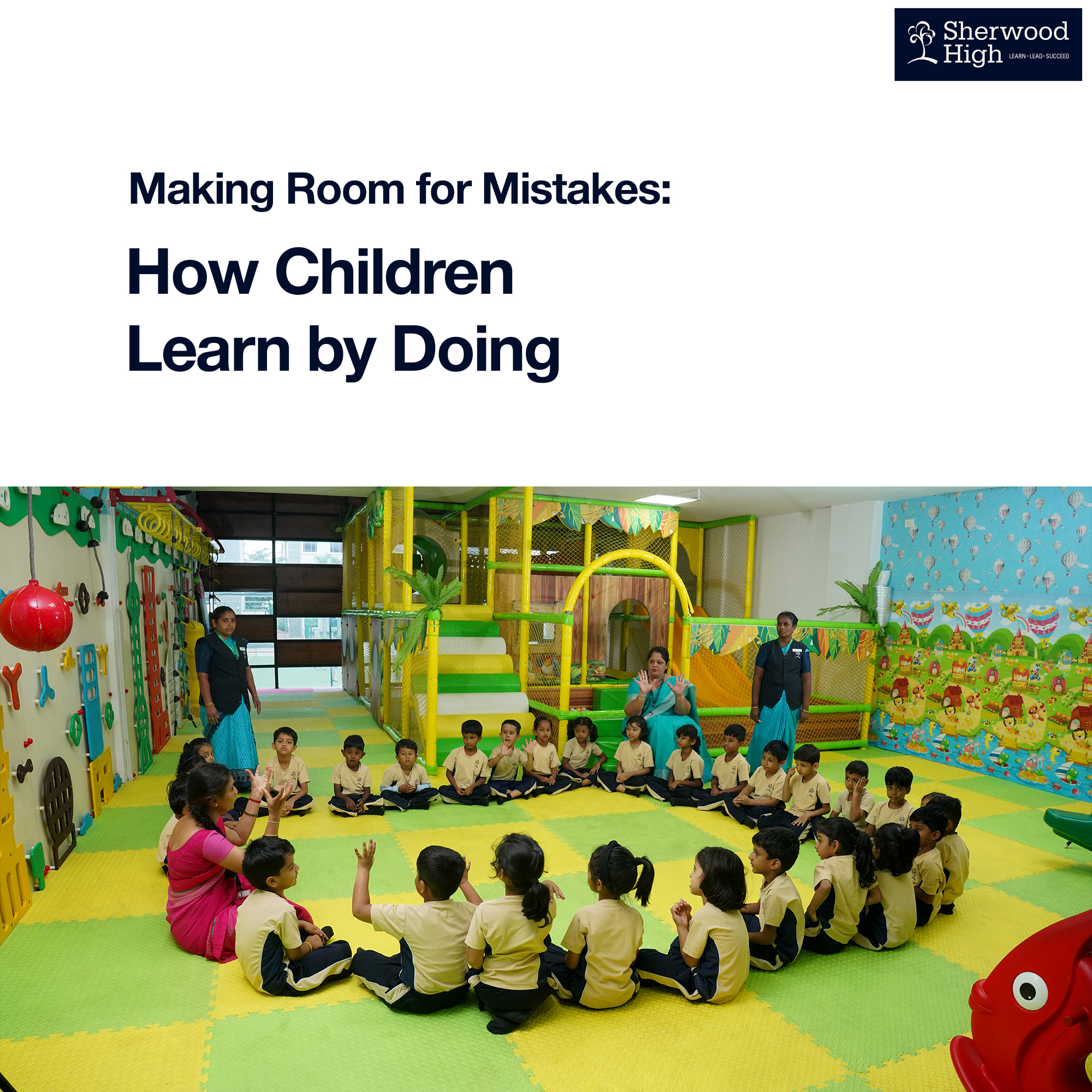
Making Room for Mistakes: How Children Learn by Doing
John Dewey once hit the nail on the head: “Give the pupils something to do, not something to learn; and the doing is of such a nature as to demand thinking; learning naturally results.”
Yet, we seem to be hard wired to think differently and expect the opposite. Whether it is in our classrooms or our kitchen tables we are conditioned to celebrate the perfectly curated polished product. If we want our children to experience real growth we need to stop chasing perfection. Why can’t we try and shift our focus entirely to the process? Because it is in that messy, chaotic, and occasionally frustrating journey of learning by doing that real growth happens.
Children are born curious, so we need to let them get their hands dirty. Think about it: no child has ever learned to ride a bike by opening a manual or watching a YouTube tutorial. The experiential learning happened somewhere between the wobbling, scraping a knee, and that triumphant exhilaration when they find their balance. That is learning in its purest form.
By pushing for the ‘polished product’ we are inadvertently teaching our children that missteps and mistakes are ‘failures.’ What we need to teach them is that these ‘nudges’ are honest feedback that is asking us to make corrections and adjustments in our grip, weight or strategy.
A student building a lopsided bridge out of blocks or struggling through a science experiment, is not just “doing a task” label. They are forging deep, lasting neural connections that passive listening simply cannot touch. When that block collapses it is not a failure- it is the foundation of a better design. We must applaud these actions for the children are taking an abstract concept and turning it into something they can actually hold in their hands.
The need of the hour is to shift the culture in our schools and homes. We need to change the way we talk about work and do away with questions like “What grade did you get?” or “Did you complete the tasks?” Our questions need to be rephrased and focus on experience, “Which part did you enjoy the most?” By doing so we are shifting the focus from output to learning and growth.
Let us humanize struggles by sharing stories of our falls and failures. Children need to see us laugh at our failures. then realign and rework. This will help create an environment where trying and failing are celebrated and not judged and there is no pressure to get it right in the first attempt.
When we stop treating mistakes like failures, we stop stifling innovation. Let’s encourage our children to pick up the tools, get a little dirt under their fingernails, and embrace the niggles and nudges. After all, nobody masters anything in a straight line. It’s always a winding, unpredictable road—and that’s exactly where the best lessons are hidden. Let us celebrate the process.