

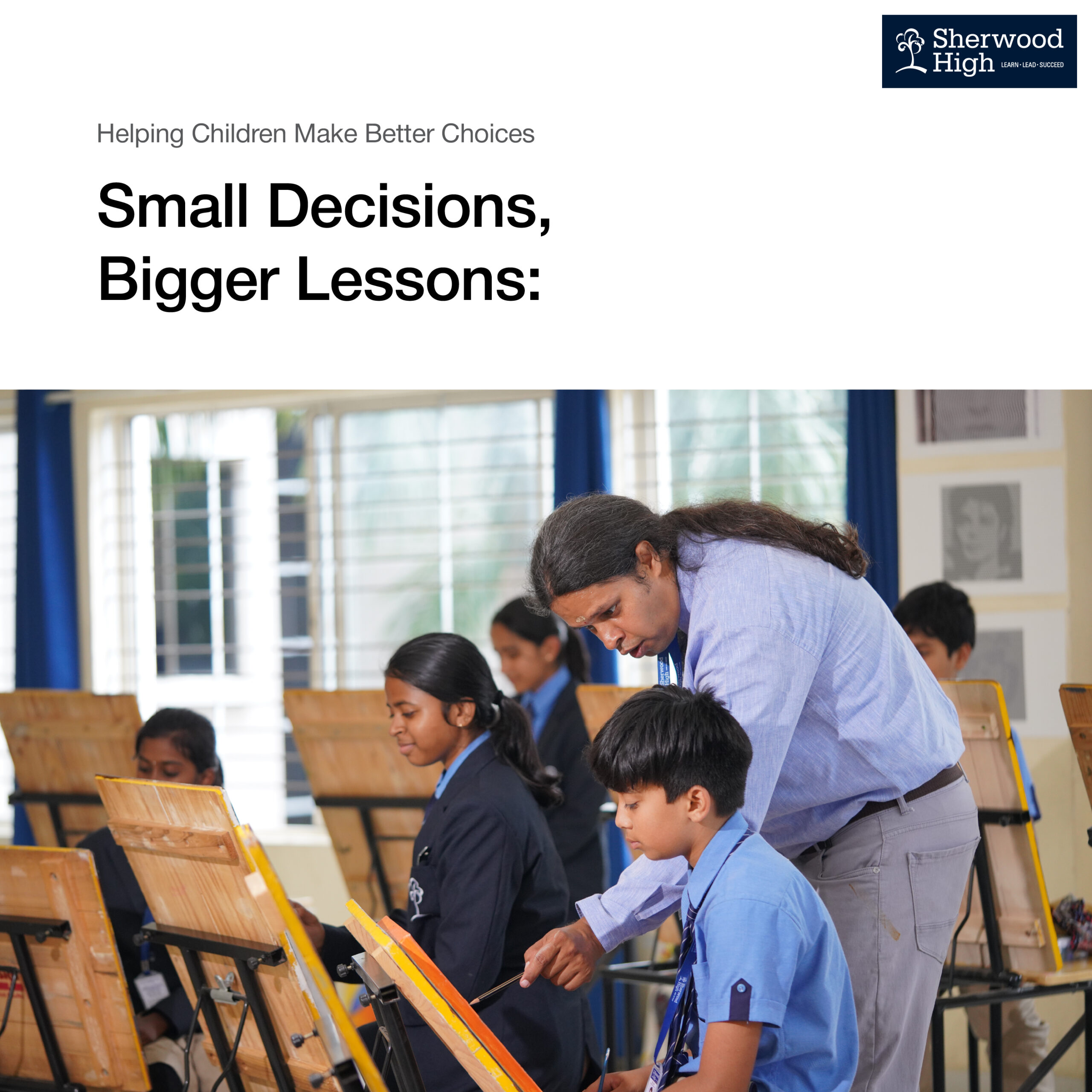
Small Decisions, Bigger Lessons: Helping Children Make Better Choices
Childhood is filled with choices.
What to read.
Whom to sit with.
Whether to speak up.
How to respond when something goes wrong.
Whether to keep trying or give up.
To an adult, many of these decisions may seem small. But for a child, they are part of learning how to think independently, take responsibility and understand the consequences of their actions.
Decision-making is not something children suddenly learn when they become adults. It develops gradually through everyday experiences, conversations and opportunities to make choices for themselves.
Why Small Choices Matter
Every choice gives a child an opportunity to think.
When children decide how to organise their schoolwork, choose between different activities or work through a disagreement with a friend, they are learning to consider options and understand outcomes.
The goal is not for children to make the “right” decision every time.
What matters is that they learn to pause, think and understand why they are making a particular choice.
Over time, these small moments can help children become more confident and responsible decision-makers.
Give Children Choices They Can Handle
Decision-making begins with age-appropriate independence.
For younger children, this may be as simple as choosing which book to read first, deciding how to organise their desk or selecting an activity during free time.
As children grow older, the choices naturally become more complex.
They may need to decide how to divide their study time, manage responsibilities, choose extracurricular activities or respond to peer pressure.
Giving children some control over everyday decisions helps them understand that their choices matter.
It also teaches them that independence comes with responsibility.
Ask Questions Before Giving Answers
Adults often want to help children by immediately offering solutions.
But sometimes the more useful approach is to ask a question.
“What do you think you could do?”
“What might happen if you choose that?”
“Is there another way to look at the situation?”
“What would you do differently next time?”
Questions encourage children to think through a situation rather than simply follow instructions.
This does not mean leaving children to solve every problem on their own. Guidance is important. But guidance can help children develop their own judgement instead of depending on adults for every answer.
Let Mistakes Become Part of the Lesson
Not every choice will work out well.
And that is part of learning.
A forgotten assignment, a disagreement with a friend or a poor use of time can become valuable opportunities for reflection.
Instead of focusing only on what went wrong, children can be encouraged to think about what the experience taught them.
What happened?
What could have been done differently?
What can be changed next time?
When children are allowed to learn from manageable mistakes, they begin to understand that a poor decision does not define them. It simply gives them information for the next decision.
Help Them Think Beyond the Immediate Moment
Children often make choices based on what feels easiest or most enjoyable right now.
Developing stronger decision-making skills involves learning to think about what happens next.
For example, choosing to finish an assignment before playing may mean giving up something enjoyable for a short time, but it can reduce stress later.
Learning to consider consequences helps children understand the connection between their actions and outcomes.
Gradually, this develops self-control, responsibility and better judgement.
Make Values Part of Everyday Decisions
Some decisions are not simply about convenience. They involve values.
Should I include someone who is being left out?
Should I admit that I made a mistake?
Should I speak up when something feels unfair?
Should I return something that does not belong to me?
These everyday situations help children understand qualities such as honesty, empathy, fairness and respect.
Values become meaningful when children learn to apply them in real situations rather than simply hear about them in theory.
Avoid Making Every Decision for Them
It can be tempting for adults to step in, particularly when they already know what the better choice might be.
But if every decision is made for a child, there are fewer opportunities for them to practise making decisions themselves.
The role of parents and educators gradually shifts from deciding for children to helping them think.
Sometimes that means offering two appropriate options.
Sometimes it means discussing possible consequences.
And sometimes it means allowing children to make a choice and experience the result.
Building Decision-Makers for Life
Good decision-making is not about always knowing the perfect answer.
It is about learning to pause, consider, choose and reflect.
When children are trusted with small decisions, they begin to understand themselves better. They learn what matters to them, how their actions affect others and how to take responsibility when things do not go as planned.
The choices may begin small.
But the lessons behind them are much bigger.
By giving children space to think, choose and learn, we help them grow into individuals who can approach bigger decisions with confidence, responsibility and care.