

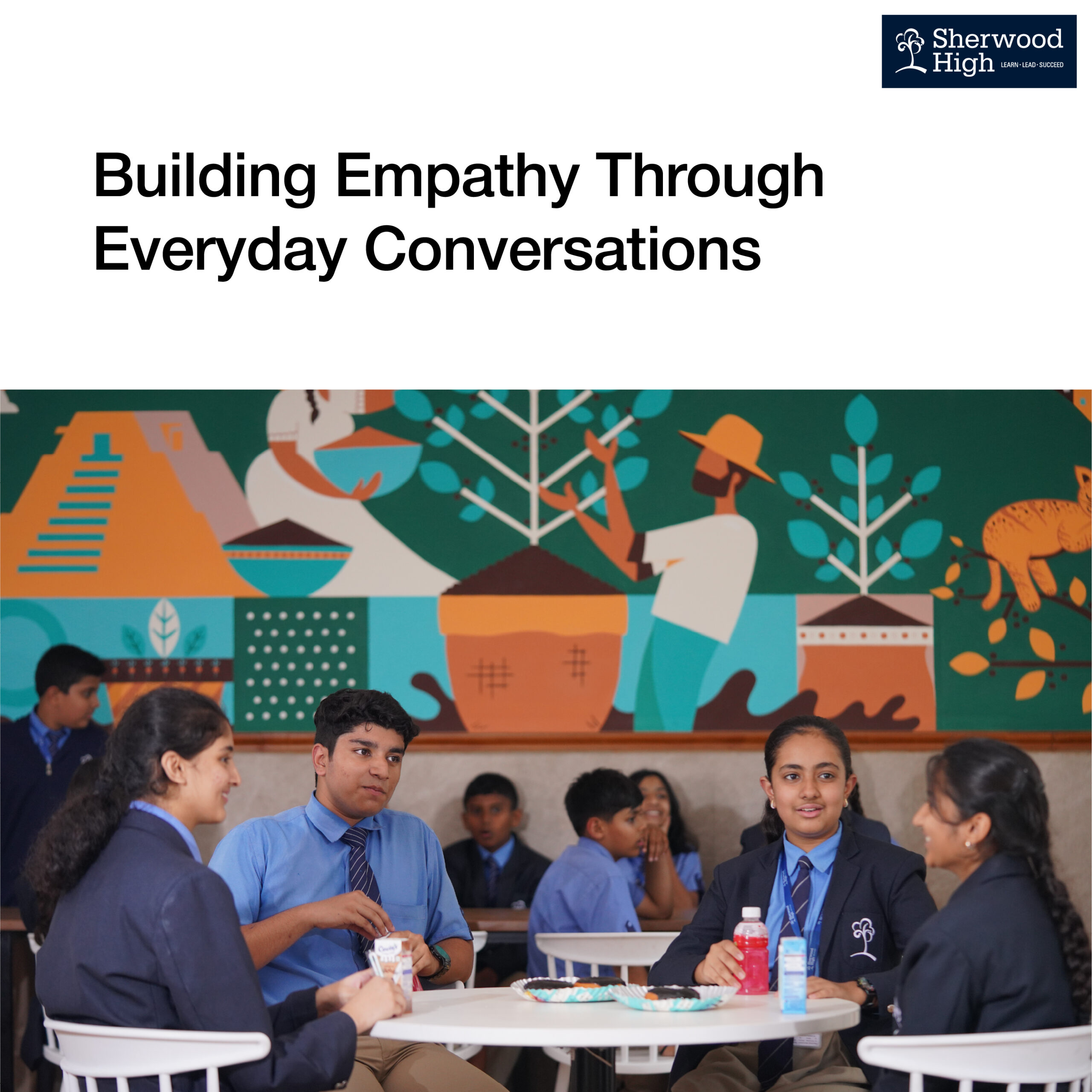
Building Empathy Through Everyday Conversations
Empathy does not always begin with a big lesson.
Often, it begins with a simple conversation.
A child notices that a friend is quiet.
Someone feels left out during a game.
A classmate reacts differently than expected.
A sibling is upset but does not know how to explain why.
These everyday moments give children opportunities to understand that other people may think, feel and experience the same situation differently.
Empathy grows when children learn to notice, listen and respond with care.
Start by Helping Children Notice
Before children can understand how someone else feels, they first need to notice.
Simple questions can help:
“How do you think they felt?”
“What made you notice that?”
“Did anything change in the way they were speaking or behaving?”
These questions encourage children to look beyond their own point of view.
Over time, they begin to recognise emotions not only through words, but also through tone, expressions and behaviour.
Listen Before Offering a Solution
When children share a problem, adults often want to solve it immediately.
But listening itself can teach empathy.
When a child says, “My friend ignored me today,” instead of moving straight to advice, we can first ask:
“What happened?”
“How did that make you feel?”
“Why do you think your friend may have acted that way?”
This helps children understand both their own feelings and the possibility that there may be another side to the situation.
Empathy begins when children learn that understanding comes before judgement.
Use Everyday Situations
Empathy does not need to be taught only through formal lessons.
Stories, playground moments, classroom interactions and family conversations can all become opportunities.
While reading a story, ask:
“Why do you think this character did that?”
“What might they be feeling?”
“What would you have done?”
When children practise thinking about another person’s perspective in simple situations, it becomes easier to do the same in real life.
Teach Children to Ask Better Questions
Empathy grows through curiosity about others.
Instead of assuming, children can learn to ask.
“Are you okay?”
“Do you want to talk?”
“Would you like some help?”
These are small questions, but they show children that caring is not only about knowing what someone needs. Sometimes it is about giving them space to express it.
Show Them That Feelings Can Be Different
Two people can experience the same situation in completely different ways.
One child may enjoy being on stage. Another may feel nervous.
One may find group work exciting. Another may need more time to feel comfortable.
Helping children understand this difference is important.
Empathy is not expecting everyone to feel the same way.
It is respecting how someone else feels, even when we would react differently.
Encourage Reflection After Difficult Moments
Disagreements are also opportunities to build empathy.
After a conflict, children can be encouraged to think about what happened without focusing only on who was right or wrong.
Ask:
“What do you think the other person was feeling?”
“Was there something you could have said differently?”
“What could help next time?”
Reflection helps children understand the effect their words and actions can have on others.
Model Empathy in Daily Life
Children learn a great deal from what they observe.
When adults listen patiently, apologise when needed, avoid dismissing feelings and speak respectfully about others, children notice.
Empathy becomes easier to understand when they see it being practised.
A child who regularly hears phrases such as:
“I can see why that upset you.”
“Maybe they were having a difficult day.”
“Let us try to understand what happened.”
is learning how empathy sounds in real life.
Small Conversations Build Stronger Connections
Empathy is not about always agreeing.
It is about understanding that someone else’s feelings and experiences matter.
Through everyday conversations, children learn to pause before reacting, listen before judging and think beyond their own perspective.
These may seem like small lessons.
But over time, they shape the way children build friendships, resolve disagreements and contribute to the communities around them.
Empathy grows one conversation at a time.