

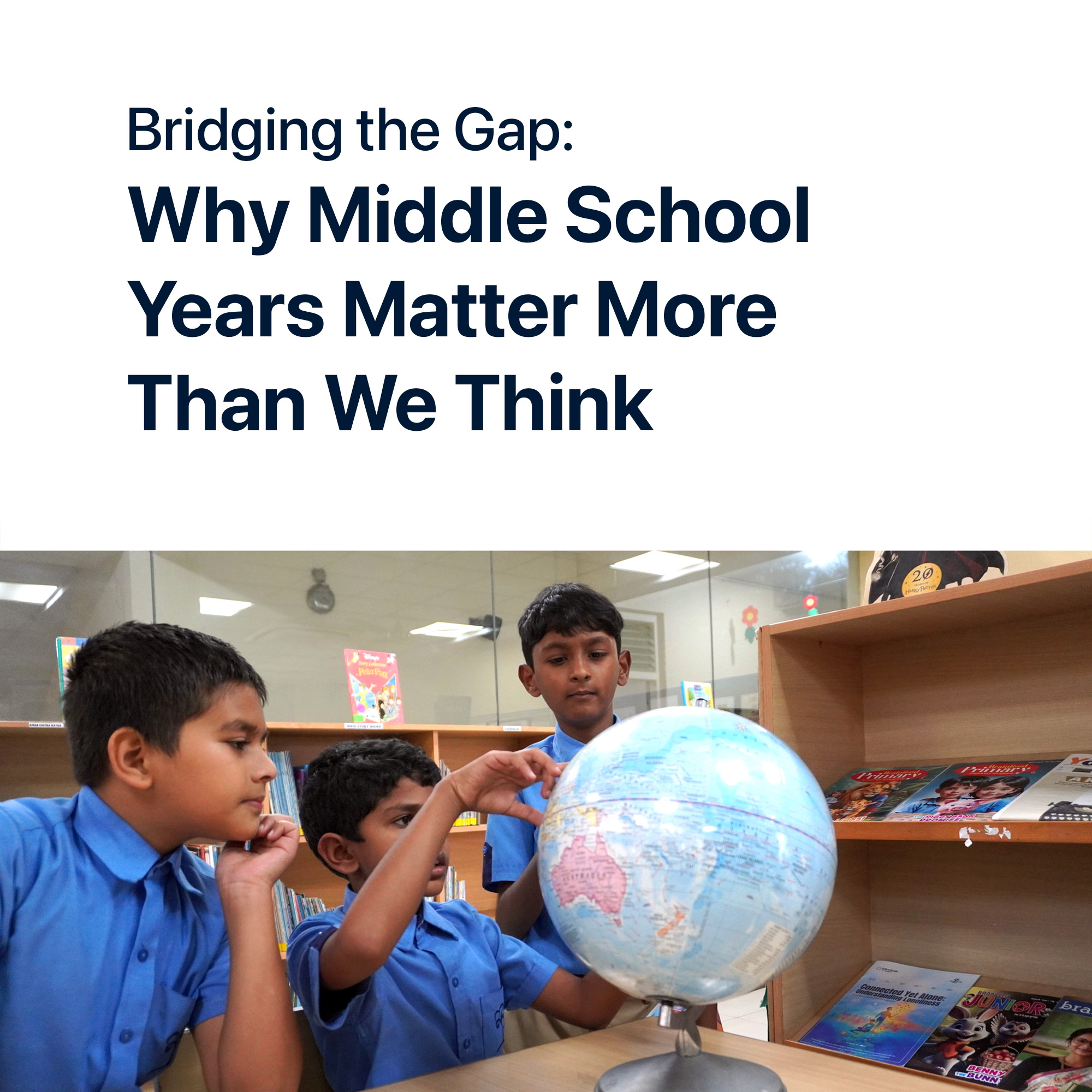
Bridging the Gap: Why Middle School Years Matter More Than We Think
So often in education, attention is focused on two clear stages – the foundational years of elementary school and the high-stakes, career-oriented years of high school. In between lies a phase that is frequently misunderstood or underestimated: middle school. Yet, these years represent one of the most significant periods in a child’s development. Middle school is not merely a transition; it is a turning point where academic attitudes, emotional resilience, identity, and life skills begin to take lasting shape.
During the middle school years, a child’s brain undergoes rapid and complex development. Neural pathways are being rewired, especially in areas linked to decision-making, emotional regulation, time management, and self-awareness. This makes the adolescent brain both highly adaptable and deeply sensitive. It is an ideal time for students to develop essential non-academic skills such as organisation, self-advocacy, and responsibility – but it is also a period when disengagement, if left unaddressed, can take root. The support students receive during this phase plays a powerful role in shaping how they approach learning and challenges in the years ahead.
Academically, middle school forms the foundation for future success. Engagement and confidence developed during these years strongly influence performance in high school. Students begin forming beliefs about what they are “good at” or “bad at,” which can either limit or empower them. When guided thoughtfully, this is the perfect stage to nurture a growth mindset – helping students understand that ability is not fixed, and that effort, strategy, and persistence matter more than early labels. Middle school also introduces broader subjects, electives, and co-curricular opportunities, allowing students to explore interests and discover strengths that may later shape academic or career paths.
Equally important is the development of learning habits. Middle school is when students begin practising independent study, managing time, organising tasks, and connecting lessons to real-world contexts. These habits are formed at a stage when academic pressure is still relatively low, making it a safe space to learn through trial and error. When students are supported rather than rushed, they gain confidence in their ability to manage increasing responsibility.
Beyond academics, the middle school years are deeply defined by social and emotional growth. Students are exploring identity, forming deeper friendships, and learning to navigate peer influence. A sense of belonging becomes crucial. Adolescents want to feel seen, accepted, and understood – not just by peers, but by the adults guiding them. When students feel connected to their school community, they show better emotional well-being, stronger motivation, and greater resilience in the face of challenges.
This period also brings heightened emotional experiences. As the brain rewires, emotions can feel intense and unpredictable. Students may struggle to articulate what they are feeling or why they feel it. Supportive environments that prioritise empathy and understanding help students learn emotional regulation – the ability to recognise feelings, manage reactions, and respond thoughtfully. These skills are essential not only for academic success, but for lifelong mental health.
Physical development adds another layer to this complex stage. Puberty introduces rapid physical changes that can affect self-image, confidence, and social interactions. Awkwardness, self-consciousness, and comparison are common experiences. Schools that foster respect, inclusivity, and kindness help students navigate these changes with dignity and self-acceptance, rather than anxiety.
Social media further complicates this landscape. While digital platforms can offer connection and self-expression, they also introduce judgement, comparison, and pressure – often without the emotional maturity needed to process them. Middle school students may avoid face-to-face interactions or struggle with understanding the long-term consequences of online behaviour. This makes guidance around appropriate behaviour, empathy, and accountability more important than ever. When students are taught how to interact respectfully – both online and offline – they develop healthier social habits and stronger interpersonal skills.
Trusted adults play a vital role during this phase. Middle schoolers are beginning to seek independence from parents, yet they still crave stability and reassurance from adults who understand them. Teachers, mentors, and school leaders become anchors during this period of uncertainty. Positive relationships with adults provide students with models for behaviour, decision-making, and resilience. When adults listen, guide without judgement, and acknowledge effort, students feel safe enough to grow.
Middle school is also a time when students begin separating into different interests and identities. Sports, arts, hobbies, and creative pursuits help students understand who they are and where they belong. These activities often become the spaces where confidence is built and friendships are formed. Feeling competent in something – whether academic, athletic, or creative – gives students a sense of purpose and belonging that carries into other areas of life.
At Sherwood High, we view middle school as a bridge that must be intentionally strengthened. It is a stage that requires balance – between structure and flexibility, guidance and independence, childhood curiosity and emerging maturity. When students are supported academically, emotionally, and socially, they transition into high school not just prepared, but assured.
Middle school may be challenging, but it is also full of possibility. It is a time when resilience is built through small setbacks, confidence grows through exploration, and identity begins to take shape. When schools and families work together to support students through this pivotal stage, they lay the groundwork for success far beyond the classroom.
Because when the bridge is strong, students don’t just move forward – they move forward with confidence, clarity, and a sense of belonging that stays with them for life.