

Building Money-Smart Students: The Role of Financial Education
Financial literacy is an essential life skill that every school child should learn from an early age. It helps students understand the value of money, the importance of saving, and the need for careful spending. When children are taught basic financial concepts such as budgeting, saving, and planning, they develop responsible habits that benefit them throughout their lives.
Financial education in schools prepares students to make informed and wise financial decisions in the future. It also builds confidence and independence, enabling them to manage money effectively and avoid unnecessary debt. Therefore, introducing financial literacy in school education is important for shaping financially responsible and secure adults.
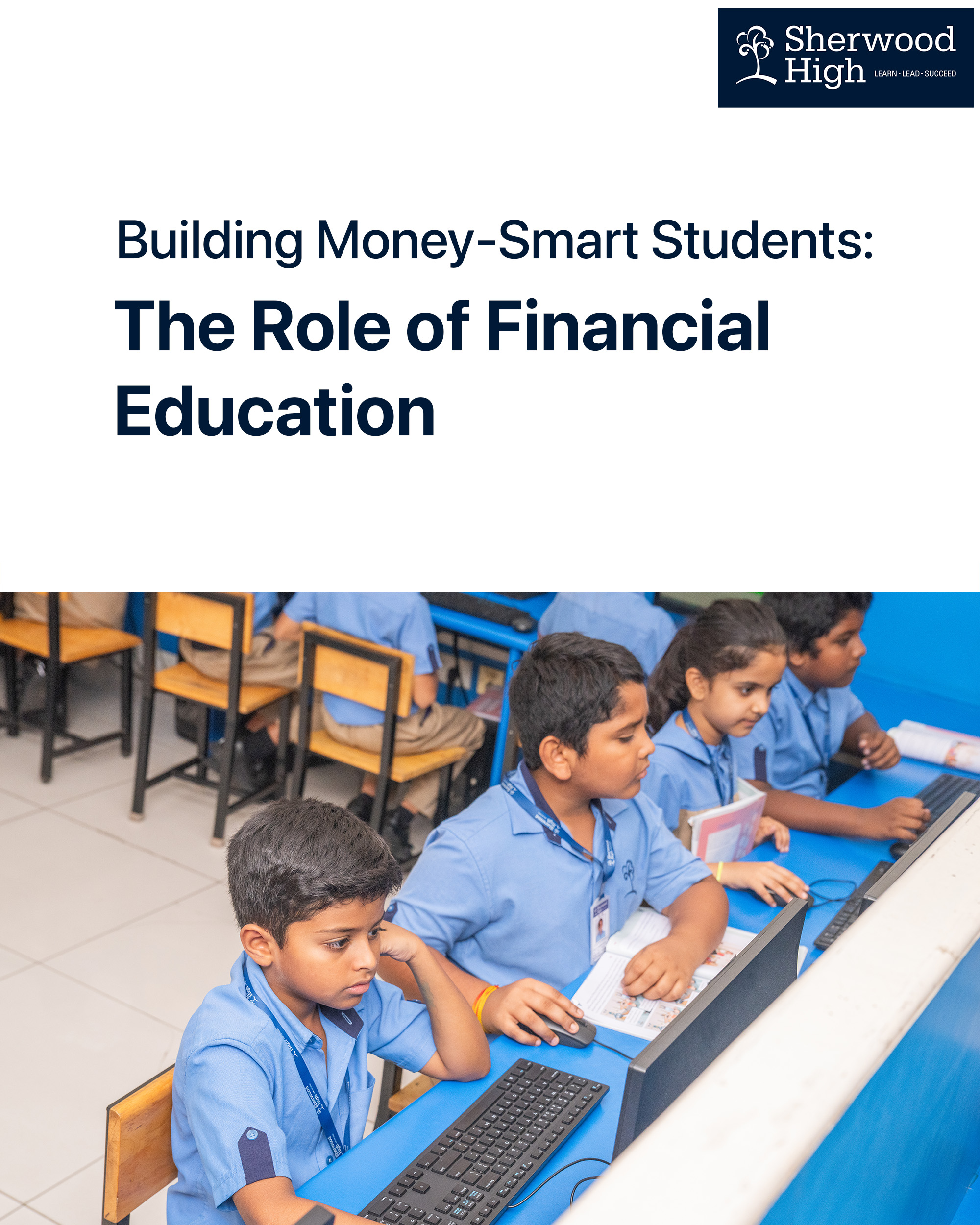
At Sherwood High, we conducted Financial Literacy Activities by celebrating Financial Literacy Week through four different modules. Age-appropriate activities were thoughtfully designed for students from Grade I to Grade XII.
These activities ranged from introducing basic financial vocabulary to the tiny tots to engaging senior students in practical tasks such as budget planning for a business. The initiative aimed to build financial awareness, develop responsible money habits, and equip students with essential life skills for the future.
As a teacher, it was truly a rewarding and fulfilling experience to observe how thoughtfully children respond when presented with real-life financial situations. Whether it was planning a budget for a class trip as a fourth grader or organizing a birthday celebration within a limited amount, students demonstrated remarkable creativity, practicality, and problem-solving skills. Such activities allowed them to apply financial concepts in meaningful and relatable ways.
In another engaging activity, students were encouraged to write a story illustrating that mere saving alone may not always lead to growth, but investing wisely in the right avenues can yield multiplied returns. Through their narratives, they reflected a growing understanding of financial planning, long-term vision, and the importance of making informed financial decisions.
In a nutshell, it was a joyful and enriching learning experience that simplified what often appears to be the complex world of financial matters. Through engaging and practical activities, students developed clarity and confidence in understanding money management. They not only grasped essential financial concepts but also began to think critically and act responsibly. Most importantly, they learned to be thoughtful and money-wise individuals, equipped with skills that will benefit them throughout their lives.