

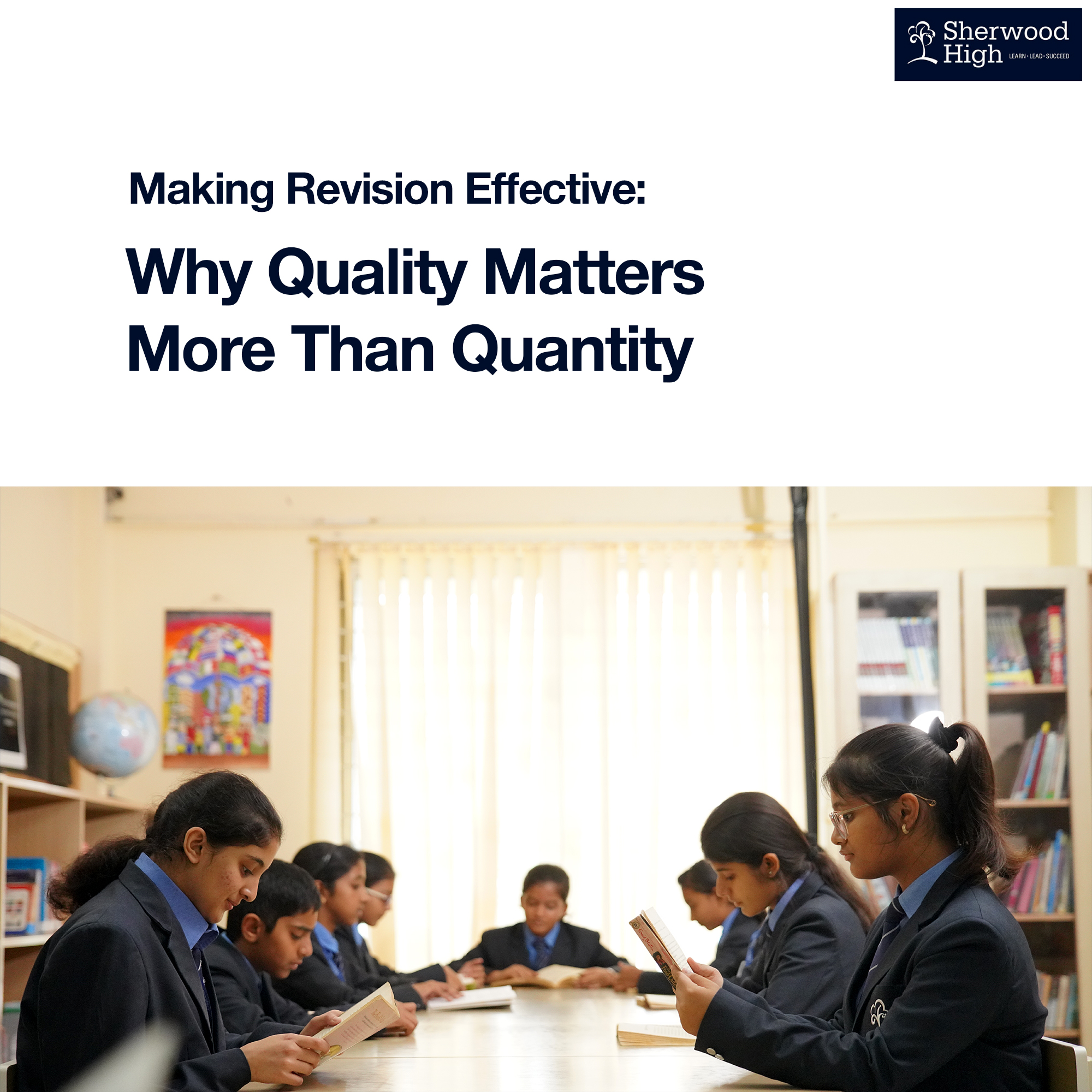
Making Revision Effective: Why Quality Matters More Than Quantity
As exams approach, it is common for students to believe that spending more hours studying automatically leads to better results. Long study sessions, late nights, and repeatedly reading the same notes may seem productive, but effective revision is not about how much time is spent, it is about how that time is used.
Quality revision focuses on understanding, retaining, and applying knowledge rather than simply covering more pages.
Study Smarter, Not Longer
Our brains absorb information best when learning is structured and purposeful. Instead of studying for hours without a break, students benefit from shorter, focused sessions with clear goals.
Breaking revision into manageable topics allows students to concentrate better and improves long-term memory. A focused 45-minute session is often more effective than several hours of distracted studying.
Active Learning Makes a Difference
Reading notes repeatedly can create the illusion of learning, but true understanding comes from actively engaging with the material.
Students can strengthen their revision by:
- Solving practice questions
- Creating mind maps
- Teaching a concept to someone else
- Using flashcards for key facts
- Revisiting mistakes from previous tests
These methods encourage deeper understanding and improve recall during examinations.
Prioritise Understanding Over Memorisation
While some facts require memorisation, most subjects demand conceptual clarity. Understanding why a concept works helps students apply it confidently in different situations, especially in analytical and application-based questions.
Quality revision encourages students to connect ideas rather than memorise isolated information.
Rest Is Part of Revision
Productive revision also includes regular breaks, sufficient sleep, healthy meals, and physical activity. A well-rested mind processes and retains information far more effectively than an exhausted one.
Taking care of physical and mental wellbeing is an important part of academic success.
Create a Personal Revision Plan
Every student learns differently. Some prefer visual notes, while others benefit from writing, discussion, or solving problems. Developing a revision schedule based on personal learning styles helps students stay organised and reduces last-minute stress.
Consistency is far more valuable than cramming.
Learning with Confidence
Revision is not about proving how many hours you can study. It is about building confidence through meaningful learning, reflection, and practice.
At Sherwood High, we encourage students to focus on quality over quantity, developing effective study habits that promote deeper understanding, independent thinking, and lasting learning.
Because successful revision is not measured by the hours spent studying, but by the confidence gained through understanding.