

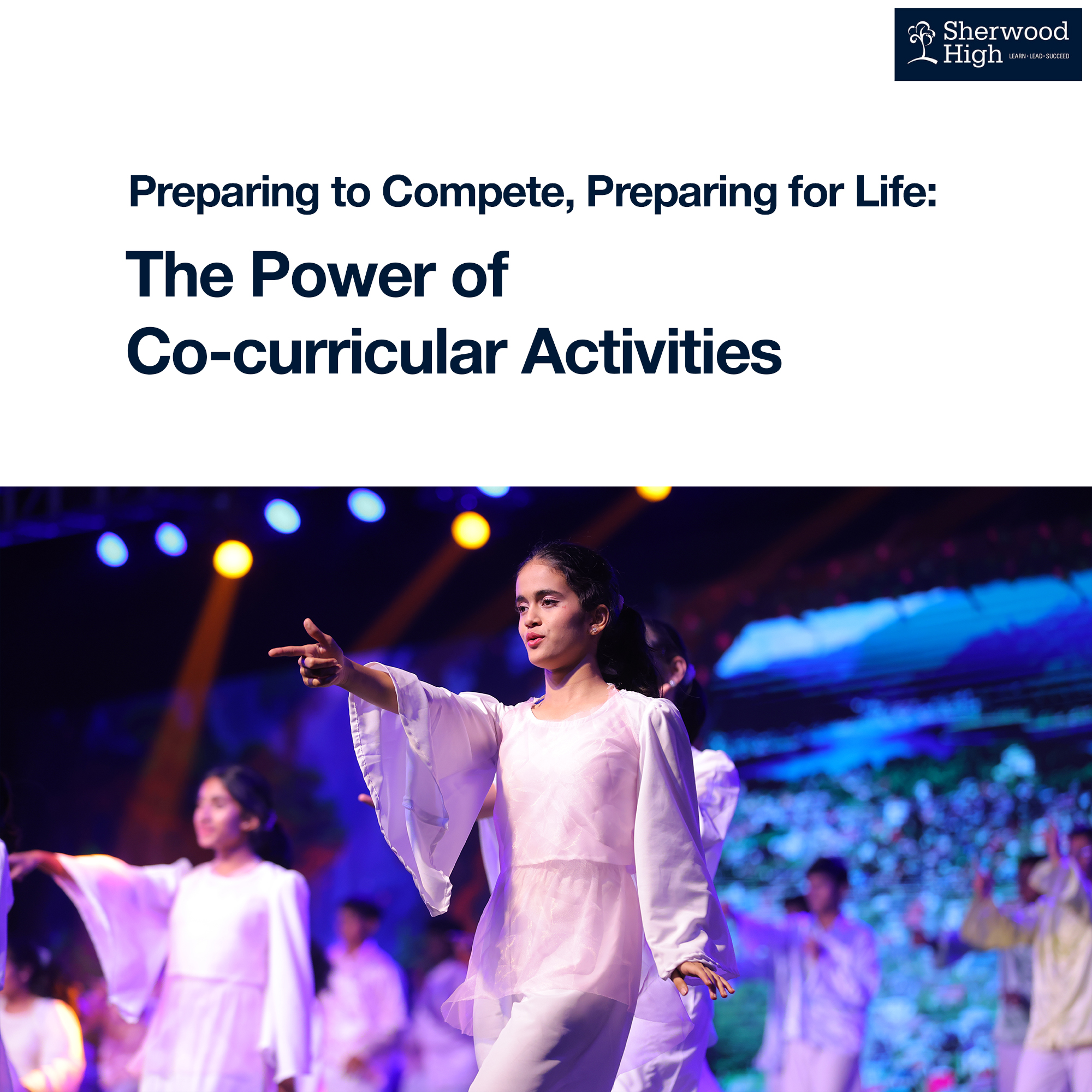
Preparing to Compete and for Life: The Power of Co-curricular Activities
Competition is an inevitable part of life. From the classroom and sports field to the stage and, eventually, the workplace, children will find themselves in situations where they are expected to perform, collaborate and give their best. Co-curricular activities prepare them for these experiences-not merely by teaching them how to win, but by helping them discover their strengths, build confidence and develop the skills to navigate challenges.
Whether it is debating, public speaking, music, dance, drama, sports or a quiz, every activity encourages children to step beyond their comfort zones. They learn to express themselves, work as a team, manage nervousness and take responsibility. These experiences complement academic learning by giving students opportunities to apply their knowledge, explore their interests and develop skills that cannot always be measured through examinations.
Learning to Step Outside the Comfort Zone
For many children, participating in a competition can be challenging at first. Standing on a stage, speaking before an audience, playing in front of a crowd or presenting an idea can bring nervousness and self-doubt.
Yet, it is precisely these moments that create opportunities for growth.
With every attempt, students become a little more comfortable with uncertainty. They learn to prepare, practise and trust themselves. A child who once hesitated to speak may gradually become a confident public speaker. A student who is nervous about performing may discover a passion for music or theatre.
Confidence is rarely built in a single moment. It grows through repeated opportunities to try.
Competition Teaches More Than Winning
It is natural for students to want to win. Achievements bring excitement, recognition and a sense of accomplishment. But the true value of competition lies in what happens before and after the result.
Preparation teaches discipline and commitment. Practice teaches consistency. Performing under pressure teaches composure. Working towards a common goal teaches teamwork.
As Ralph Waldo Emerson reminds us, “Life is a journey, not a destination.” In the same way, participation in a competition is not just about the final result. The preparation, practice, friendships, feedback and confidence gained along the way are equally valuable.
Learning to Handle Success and Failure
One of the most important lessons co-curricular activities can teach children is how to respond to outcomes.
Winning teaches students to appreciate achievement while remaining humble. Losing, although difficult, can teach an equally important lesson: setbacks are not failures of character; they are opportunities to learn and improve.
A student who does not win a competition may return with a better understanding of what they need to work on. They may learn to accept constructive feedback, identify their strengths and try again.
This ability to recover from disappointment is resilience, and it is a skill that extends far beyond school.
Building Teamwork and Responsibility
Many co-curricular activities require students to work with others. A sports team, musical ensemble, theatre production or group presentation cannot succeed through individual effort alone.
Students learn to listen to one another, communicate clearly, divide responsibilities and respect different perspectives. They also discover that their individual contribution affects the larger team.
These experiences help develop collaboration, leadership and accountability-skills that are valuable in higher education, professional environments and everyday life.
Leadership, in particular, does not always mean being the person at the front. Sometimes it means encouraging a teammate, helping someone practise, taking responsibility when something goes wrong or making space for another person’s ideas.
Discovering Strengths and Interests
Co-curricular activities also provide children with opportunities to discover abilities they may not realise they possess.
A student who finds academics challenging may excel on the sports field. Another may discover confidence through theatre, creativity through art, discipline through music or curiosity through a quiz.
This broader exposure allows children to understand that achievement can take many forms.
More importantly, it gives them the freedom to explore their interests before making decisions about their future. Experiences in sports, performing arts, public speaking, technology, design or other activities can sometimes reveal passions that eventually influence academic and career choices.
Competition With the Right Perspective
Healthy competition should encourage children to challenge themselves rather than simply measure themselves against others.
The goal should not be to create a constant comparison of who is better. Instead, competition can become an opportunity to ask:
Can I improve? Can I contribute? Can I try something I have never tried before?
This approach helps students develop a growth mindset. They begin to see ability not as something fixed, but as something that can develop through effort, practice and perseverance.
And while striving for excellence matters, children should also learn to enjoy the experience. In the constant pursuit of achievement, it is important to pause, appreciate the people around them and value the joy of participation.
Preparing for Life Beyond School
The skills developed through co-curricular activities remain relevant long after the competition ends.
A student who learns to speak confidently on stage may carry that confidence into a university presentation. A child who learns teamwork through sport may apply it to a future workplace. A student who learns resilience after losing a competition may be better prepared to navigate setbacks later in life.
These are not separate from education. They are an important part of it.
At Sherwood High, learning extends beyond textbooks and classrooms. Co-curricular experiences give students opportunities to participate, explore, compete, create and discover who they are becoming.
Ultimately, co-curricular activities prepare children for far more than competitions. They prepare them for life by nurturing confidence, courage, discipline, teamwork, communication and resilience.
The trophy may mark the achievement.
The applause may mark the moment.
But the journey is what shapes the person.