

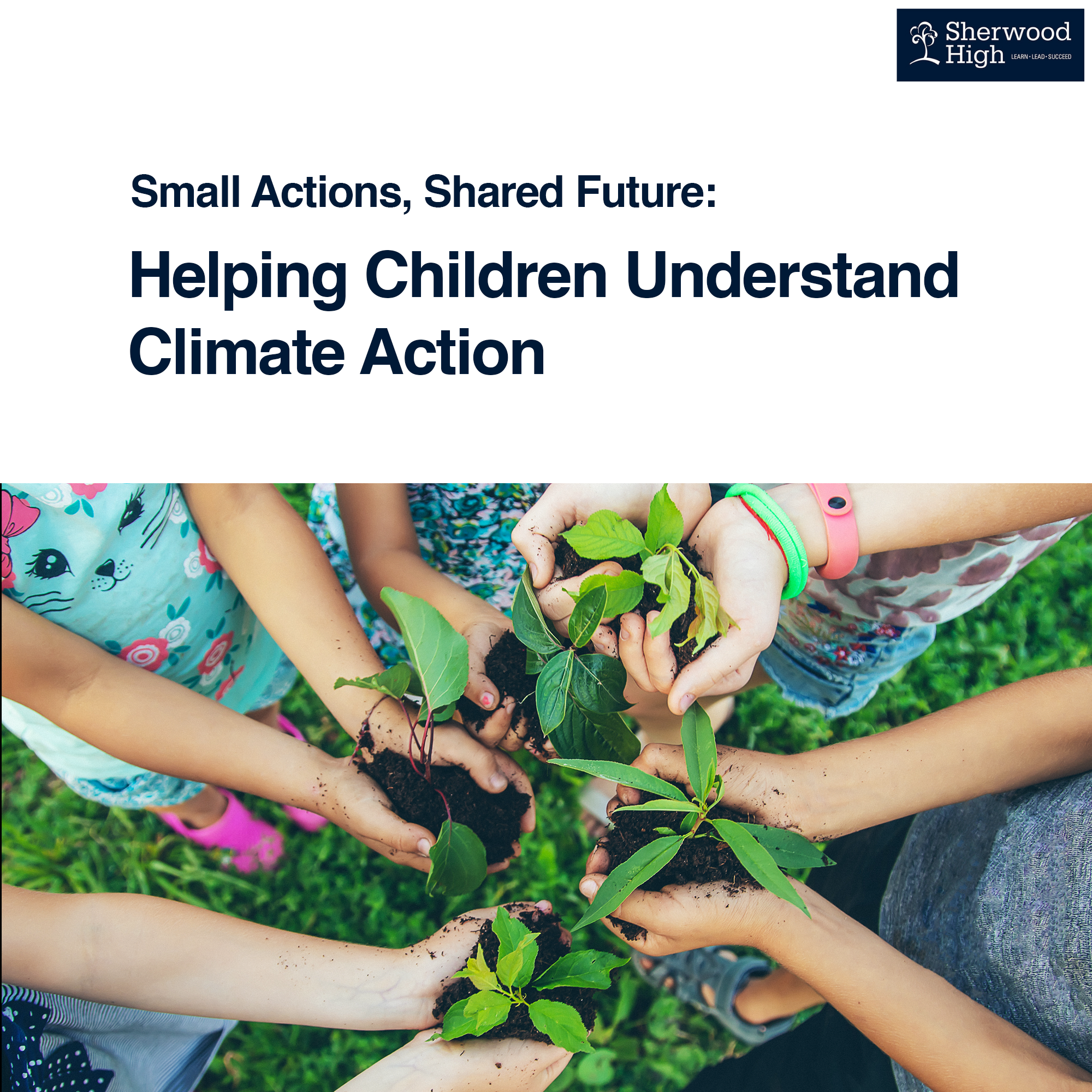
Small Actions, Shared Future: Helping Children Understand Climate Action
Climate change can feel like a very big subject, especially for young learners. It involves our weather, oceans, forests, cities and the way we use the planet’s resources. But understanding climate action does not have to begin with complicated science. It can begin with something much simpler: noticing the world around us.
This is at the heart of Sustainable Development Goal 13: Climate Action, which calls for action to address climate change and its impacts.
Understanding Our Changing Climate
The Earth’s climate has always changed over long periods of time. However, human activities, particularly the burning of fossil fuels, have increased greenhouse gases in the atmosphere and contributed to the warming we are experiencing today.
For children, climate education can start by connecting these larger ideas to everyday observations.
Why are trees important? Where does electricity come from? What happens to something after we throw it away? Why should we conserve water?
Simple questions like these help children understand that the environment is connected to the choices we make.
Climate Action Begins with Awareness
Children do not need to solve climate change on their own. What they can develop is an awareness of how their everyday habits affect the environment.
Switching off unnecessary lights, using water thoughtfully, reducing waste, carrying reusable items, caring for plants and keeping surroundings clean may appear to be small actions. But these habits introduce something much bigger: responsibility.
When sustainable choices become part of everyday life at a young age, children begin to understand that caring for the planet is not something reserved for special occasions.
From the Classroom to the Real World
Schools have an important role in making environmental learning meaningful.
Science can help students understand ecosystems and climate. Geography can show how communities and environments are connected. Projects can encourage students to investigate real environmental challenges. Outdoor experiences can help them appreciate biodiversity and the natural world firsthand.
The objective is not simply to teach children facts about climate change. It is to help them become curious enough to ask questions and thoughtful enough to consider solutions.
Hope Is Part of Climate Education
Conversations about climate change can sometimes focus heavily on problems. For children, it is equally important to talk about possibilities.
Cleaner energy, greener cities, conservation, sustainable technology and responsible consumption all demonstrate that people can make better choices and develop new solutions.
Young people should grow up understanding the challenges facing our planet, but also believing that positive change is possible.
A Future They Can Help Shape
Climate action begins long before someone becomes a scientist, policymaker or environmentalist. It begins when a child learns to value the world around them.
At Sherwood High, we believe learning should help students understand not only how the world works, but also how their choices can contribute to it.
Because the future of our planet will eventually belong to today’s children. Helping them care for it is one of the most meaningful lessons we can offer.